Math is Mine
I can look back at my answers from Lesson 1-1, describe how my math biography has changed this year, and recognize ways we are all doers of math.
How to Use This Deck
Click Present or press F11 for fullscreen. Use arrow keys to advance.
Blue boxes show exactly what to say, ask, and how long to spend.
Text boxes, polls, and drag-sort save automatically in the browser.
Press N or click 📝 in the toolbar for pacing tips and answers.
Launch the full HTML activity for independent practice.
File → Print or the print button for handout copies.
🎯 Content Objective / Objetivo de contenido
I can look back at my answers from Lesson 1-1, describe how my math biography has changed this year, and recognize ways we are all doers of math.
Today's Flow
Total pacing: ~45 min · Progress bar at top tracks your place
LAUNCH
⏱ ~10 min
⏱️ 3 MIN · THINK-PAIR-SHARE
In September you estimated 20 cars × 4 riders = about 80 Ferris wheel riders per turn. Now, at 6 turns an hour, how many riders per hour — and what tool did you use that you didn't have in September?
Check for Understanding #1
Teacher: If >30% thumbs down, re-teach with a fresh example before moving on.
Unit 10 · Lesson 6
Throughout this school year, you have seen math used in many different activities and used it to solve different kinds of problems. Today you look back at the answers you wrote to the questions in Lesson 1-1 — and see how far your math story has come.
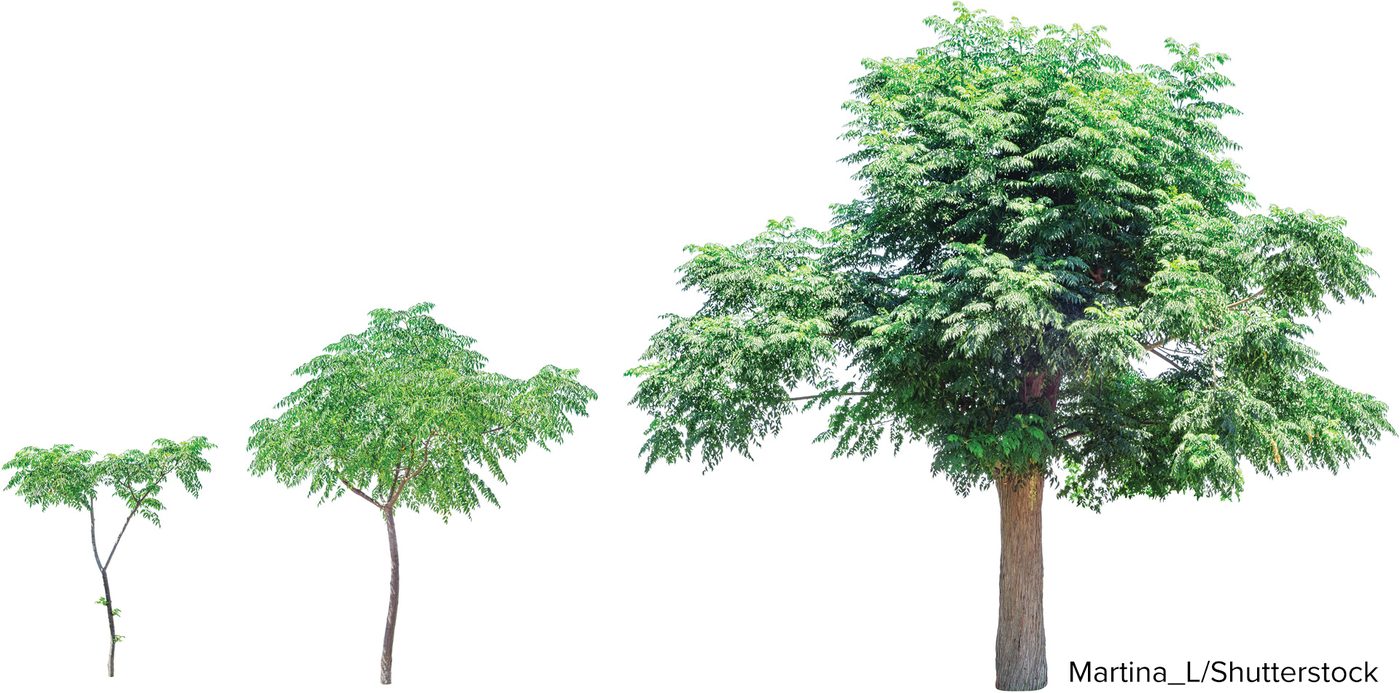
Concept Launch
💡 Your math story, one year later
In Lesson 1-1 you estimated riders on a Ferris wheel, decomposed 78.5, and wrote your math story. The question now is not 'what is math?' but 'how have I changed as a doer of math?'
Mathematical Reflection & Portfolio Culmination. 1. Synthesize grade-level mastery across Number Systems, Ratios, Expressions, Geometry, and Statistics. 2. Justify problem-solving strategies using multiple representations (equations, graphs, models). 3. Reflect on mathematical growth and communicate solutions with precision and confidence
Check for Understanding #2
Teacher: If >30% thumbs down, re-teach with a fresh example before moving on.
Now you try
VOCABULARY
⏱ ~8 min
| Term / Término | Meaning / Significado | Example / Ejemplo | Visual |
|---|---|---|---|
| math biography biografía matemática |
The story of your relationship with math — and how it has changed over time. La historia de tu relación con las matemáticas y cómo ha cambiado con el tiempo. |
In September I dreaded fractions; in June I divide them without fear. | September: “I am not a math person.” June: “I can explain why it works.” |
| reflect reflexionar |
To look back at what you did, felt, and learned, and think about what it means. Mirar atrás a lo que hiciste, sentiste y aprendiste, y pensar en lo que significa. |
Rereading your Lesson 1-1 answers and noticing what has changed. | Looking back at the tram problem: what worked, what you would change. |
| growth crecimiento |
The change between what you could do before and what you can do now. El cambio entre lo que podías hacer antes y lo que puedes hacer ahora. |
Then: estimate about 80 riders. Now: also find rates, ratios, and percents. | In Unit 1 you estimated 80 riders; now you find 480 riders per hour. |
| confidence confianza |
Trusting yourself to try a problem, even when the first attempt might fail. Confiar en ti mismo para intentar un problema, aunque el primer intento pueda fallar. |
Starting a hard problem instead of waiting for someone else to. | Starting a hard problem before you are sure it will work. |
| community comunidad |
The people and places around you — where math shows up outside the classroom. Las personas y los lugares que te rodean, donde las matemáticas aparecen fuera del aula. |
Store discounts, bus schedules, game scores, recipes at home. | The people and places where math shows up — home, work, the neighborhood. |
Which Word Fits?
The story of your relationship with math over time is your ___ ___.
Use It In a Sentence
Check for Understanding #3
Teacher: If >30% thumbs down, re-teach with a fresh example before moving on.
Turn & Talk — Launch
In September you estimated 20 cars × 4 riders = about 80 Ferris wheel riders per turn. Now, at 6 turns an hour, how many riders per hour — and what tool did you use that you didn't have in September?
👂 Listen For
A strong answer multiplies 80 × 6 = 480 correctly and names 'rate' as the new tool. A weak answer gives 480 with no explanation of what changed since September.
Extend: The wheel now runs 480 riders an hour. If it operates for 5 hours, how many total riders is that — and how is this calculation an even bigger extension of your September math?
EXPLORE & PRACTICE
⏱ ~18 min
Visual Modeling Workspace
Use the drawing tray below to annotate the visual model. Teacher: say "Click to reveal" on key steps.
Explore Activity
The September cards come straight from Lesson 1-1 — you were already a doer of math before this year started. The Grade 6 cards are what this year added. After sorting, tell a partner which new skill you have actually used outside of class.
✍️ Explore Discourse
Tell your partner one thing you moved into the 'learned this year' column. What could you not do in September, and what specifically changed — a strategy, a representation, or your confidence?
Whiteboard Moment
Show your work clearly. Be ready to explain your thinking to a partner.
Turn & Talk — Explore
When you sorted skills into 'I could already do this in September' and 'I learned or grew into this during Grade 6,' what made 'dividing a fraction by a fraction' belong in the growth column?
👂 Listen For
Listen for students distinguishing skills that existed before the year started from skills built during Grade 6 — not just listing skills without sorting them.
Extend: Pick one skill from the growth column and explain how it changes the way you would solve a problem from September, like the Ferris wheel estimate.
Practice Check A
Now stretch the September estimate with this year's math: about 80 riders per turn, 6 turns each hour. About how many riders per hour?
✍️ Show Your Work
Explain why your answer is correct using today's vocabulary.
Practice Check B
Percents were new this year. What is 50% of 157?
✍️ Show Your Work
Explain why your answer is correct using today's vocabulary.
Net Fold Explorer
Complete the interactive activity using today's strategy.
✍️ Justify Your Thinking
Sort each idea from this year into the unit of mathematics it belongs to.
A classmate turned in the work below. One step has a mistake. Read every step, find it, name it, and fix it.
No worked steps provided for this lesson.
Choose ONE option to show what you know — then do it in the workspace below.
Use evidence from today's lesson to complete each frame.
Today's key idea is: "Mathematical Reflection & Portfolio Culmination. 1. Synthesize grade-level mastery across Number Systems, Ratios, Expressions, Geometry, and Statistics. 2. Justify problem-solving strategies using multiple representations (equations, graphs, models). 3. Reflect on mathematical growth and communicate solutions with precision and confidence" — and it works because ___.
Because math biography means ___, but a tricky part is ___, so I have to ___.
I can justify my method by showing ___, which proves my answer makes sense.
I can prove my answer is correct by ___, using reflect to check my work.
✍️ TWR · WRITE 3 SENTENCES · 7 MIN
Mathematical Reflection & Portfolio Culmination. 1. Synthesize grade-level mastery across Number Systems, Ratios, Expressions, Geometry, and Statistics. 2. Justify problem-solving strategies using multiple representations (equations, graphs, models). 3. Reflect on mathematical growth and communicate solutions with precision and confidence because ___
Mathematical Reflection & Portfolio Culmination. 1. Synthesize grade-level mastery across Number Systems, Ratios, Expressions, Geometry, and Statistics. 2. Justify problem-solving strategies using multiple representations (equations, graphs, models). 3. Reflect on mathematical growth and communicate solutions with precision and confidence but ___
Mathematical Reflection & Portfolio Culmination. 1. Synthesize grade-level mastery across Number Systems, Ratios, Expressions, Geometry, and Statistics. 2. Justify problem-solving strategies using multiple representations (equations, graphs, models). 3. Reflect on mathematical growth and communicate solutions with precision and confidence so ___
🌱 TWR · GROW THE KERNEL · 6 MIN
Answer these to add detail
Sentence starters (tap to use)
Student Workspace
The September cards come straight from Lesson 1-1 — you were already a doer of math before this year started. The Grade 6 cards are what this year added. After sorting, tell a partner which new skill you have actually used outside of class.
| Column A | Column B |
|---|---|
✏️ Sketch Your Strategy
Differentiation Paths
Step-by-step with a worked model and sentence frames.
In Lesson 1-1 you estimated the Ferris wheel: 20 cars each holding about 4 people. About how many riders was that?
Now stretch the September estimate with this year's math: about 80 riders per turn, 6 turns each hour. About how many riders per hour?
Which set shows THREE correct ways to write 78.5 using skills from this year?
Partner Activity
Work with your partner on the practice problems at your differentiation path level. Explain each step using math vocabulary.
Check for Understanding #4
Teacher: If >30% thumbs down, re-teach with a fresh example before moving on.
Real-World Connection
🌍 Math in the Wild
You and your classmates each wrote about your math stories at the beginning of the school year. Everyone has their own math story, and as you encounter new challenges and experiences, your story might change.
✍️ Connection Reasoning
How does your classmate's end-of-school-year math story compare to your story?
Describe how your math story has ___ this year, ask a ___ about their story, and then ___ the two to see how they are alike and different.
Turn & Talk — Connect
In September you decomposed 78.5 as 70 + 8.5. This year you learned 78.5 = 157 ÷ 2 and 50% of 157 = 78.5. How does comparing these show your math story changing?
👂 Listen For
A strong answer names a specific new method (division or percent) and connects it back to 78.5 correctly, not just claiming 'I know more now.'
Extend: Ask a classmate for one new way THEY found to write 78.5. Compare it to yours — what's the same, and what's different about the tools you each used?
Summarize: Math is Mine
Mathematical Reflection & Portfolio Culmination. 1. Synthesize grade-level mastery across Number Systems, Ratios, Expressions, Geometry, and Statistics. 2. Justify problem-solving strategies using multiple representations (equations, graphs, models). 3. Reflect on mathematical growth and communicate solutions with precision and confidence
In your own words:
CLOSURE & REFLECT
⏱ ~8 min
Today I learned that ___ because ___.
One thing I am still not sure about is ___.
Which statement best captures this lesson's end-of-year summary of 'Math is Mine'?
Bonus Exit Check
Which of these is the strongest evidence that YOUR math reasoning grew this year?
✍️ Show Your Work
Explain why your answer is correct using today's vocabulary.
Reflection & Self-Assessment
Continue Learning
Launch the Full Interactive Activity
Students continue practice in the HTML lesson engine with auto-check, hints, and differentiation.
Family Connection
Share tonight's family homework and discuss one vocabulary word at home.
Open Family Homework ↗Teacher Notes
⏱️ Pacing Guide
- Launch & vocab: 12 min
- I Do / We Do / You Do: 15 min
- Explore & practice: 15 min
- Connect & closure: 8 min
Total: ~45 min
🎯 Listen For · Common Errors
• A strong answer multiplies 80 × 6 = 480 correctly and names 'rate' as the new tool. A weak answer gives 480 with no explanation of what changed since September.
• Listen for students distinguishing skills that existed before the year started from skills built during Grade 6 — not just listing skills without sorting them.
• A strong answer names a specific new method (division or percent) and connects it back to 78.5 correctly, not just claiming 'I know more now.'
• Listen for students naming a specific comparison strategy tied to explaining reasoning, not just "I got better."
Common mistake: Treating your math story as finished — writing the same answers you wrote in Lesson 1-1 instead of looking for what actually changed. The story grows and evolves; a retrospective that copies September has missed the point.
Answer Key (Teacher Appendix)
Hide this slide during presentation or move to the end of your copy.
✓ Practice 1: About 480 — 80 riders on each of 6 turns is 80 × 6 = 480 riders per hour — a rate, one of this year's tools.
✓ Practice 2: 78.5 — 50% means half, and 157 ÷ 2 = 78.5 — the very number you decomposed back in Lesson 1-1.
✓ Practice 3: You can explain why a method works, not just follow its steps — Constructing and explaining reasoning is the growth this lesson asks you to look for — it is what makes the math yours.
✓ Practice 4: About 80 — 20 × 4 = 80 — the same estimate you made in September, and it still holds up.
✓ Exit ticket: We are all doers of math in daily life, and our math stories continue to grow and evolve as we grow — The summary makes both claims: everyone is a doer of math in daily life, and our stories keep growing and evolving as we advance.