Math is In My World
I can represent a real-world situation with a tape diagram or table and use decimal operations to solve it.
How to Use This Deck
Click Present or press F11 for fullscreen. Use arrow keys to advance.
Blue boxes show exactly what to say, ask, and how long to spend.
Text boxes, polls, and drag-sort save automatically in the browser.
Press N or click 📝 in the toolbar for pacing tips and answers.
Launch the full HTML activity for independent practice.
File → Print or the print button for handout copies.
🎯 Content Objective / Objetivo de contenido
I can represent a real-world situation with a tape diagram or table and use decimal operations to solve it.
Today's Flow
Total pacing: ~45 min · Progress bar at top tracks your place
LAUNCH
⏱ ~10 min
⏱️ 3 MIN · THINK-PAIR-SHARE
The aerial tram must move 4,000 passengers, and each ride carries 80 passengers. What operation tells you how many rides are needed, and why?
Check for Understanding #1
Teacher: If >30% thumbs down, re-teach with a fresh example before moving on.
Unit 1 · Lesson 3
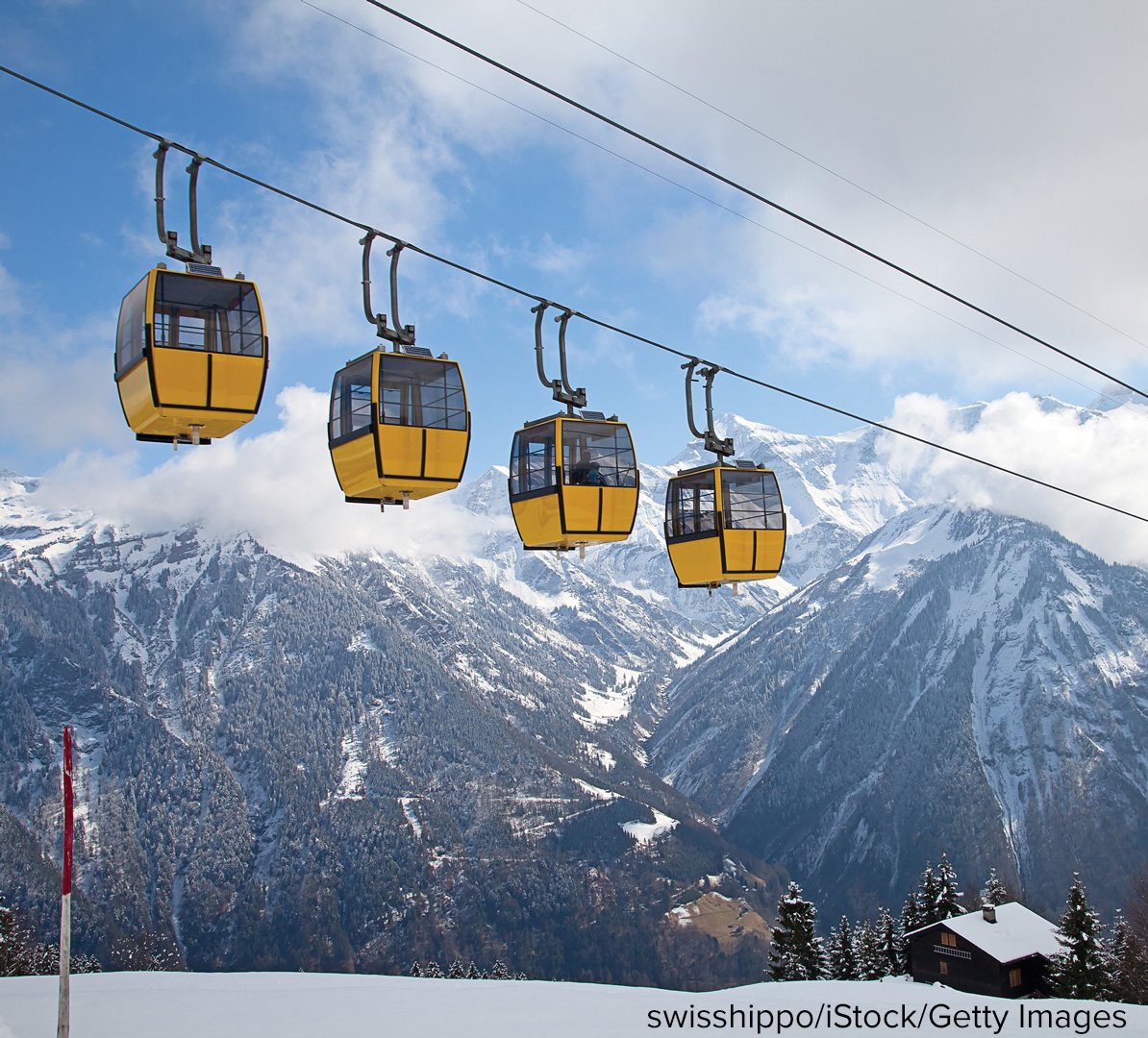
Math lives in your world — in coins on a table and tram cars over a valley. Today you visualize real situations, pick tools like tape diagrams and tables, and let decimal arithmetic do the heavy lifting.
Concept Launch
💡 Visualize the problem, then choose a tool
The book opens with a warm-up — about how many coins are in the picture? — then rides an aerial tramway that must move 4,000 passengers.
Math Practices: Visual Models & Tools. 1. Select the mathematical tool (tape diagram, number line, grid) that best represents the quantities. 2. Label all parts and units clearly. 3. Connect visual relationships directly to numerical expressions
Check for Understanding #2
Teacher: If >30% thumbs down, re-teach with a fresh example before moving on.
Now you try
VOCABULARY
⏱ ~8 min
| Term / Término | Meaning / Significado | Example / Ejemplo | Visual |
|---|---|---|---|
| representation representación |
A picture, diagram, table, or equation that shows the mathematics in a situation. Un dibujo, diagrama, tabla o ecuación que muestra las matemáticas de una situación. |
A tape diagram representing 4,000 passengers split into tram rides. | The same 12 shown three ways: a tape diagram, a table, and 3 × 4. |
| tape diagram diagrama de cintas |
A rectangle cut into equal parts that helps you visualize how a total breaks apart. Un rectángulo dividido en partes iguales que te ayuda a visualizar cómo se separa un total. |
A bar for 4,000 passengers cut into equal groups of 80. | One bar of 4,000 passengers cut into equal groups of 80. |
| tool herramienta |
Anything you choose to help you see relationships and solve a problem — a table, a diagram, a graph. Cualquier cosa que eliges para ver relaciones y resolver un problema: una tabla, un diagrama, una gráfica. |
A table of values relating minutes to round trips. | A table, a number line, or a tape diagram — whichever shows the relationship. |
| ordered pair par ordenado |
Two numbers that go together, like a time and a number of trips, that you can plot as a point. Dos números que van juntos, como un tiempo y un número de viajes, que puedes graficar como un punto. |
(35, 1) means 35 minutes for 1 round trip. | (4, 60): 4 hours costs $60 — the hours always come first. |
| round trip viaje de ida y vuelta |
A complete journey from the start, to the destination, and back to the start. Un recorrido completo desde el inicio hasta el destino y de regreso al inicio. |
The tram's 5-mile round trip from valley to mountain top and back takes 35 minutes. | 5 miles out plus 5 miles back = 10 miles in all. |
Which Word Fits?
A drawing, table, or equation that shows the math in a situation is a ___.
Use It In a Sentence
Check for Understanding #3
Teacher: If >30% thumbs down, re-teach with a fresh example before moving on.
Turn & Talk — Launch
The aerial tram must move 4,000 passengers, and each ride carries 80 passengers. What operation tells you how many rides are needed, and why?
👂 Listen For
A strong answer identifies division because you're splitting a total into equal-sized groups (rides of 80). A weak answer just says 'divide' without connecting it to splitting the total passengers into groups.
Extend: If each ride instead carried 100 passengers, would you need more or fewer rides than before? Justify without doing the full calculation.
EXPLORE & PRACTICE
⏱ ~18 min
Visual Modeling Workspace
Use the drawing tray below to annotate the visual model. Teacher: say "Click to reveal" on key steps.
Explore Activity
The book says we can use different operations for different parts of the problem. Sort each task by the operation that helps, then tell a partner how a tape diagram could show one of the division tasks.
✍️ Explore Discourse
Find a card where you and your partner chose different operations. What is it about the situation — not the numbers — that tells you whether division or multiplication helps?
Whiteboard Moment
Show your work clearly. Be ready to explain your thinking to a partner.
Turn & Talk — Explore
You sorted 'find how many rides are needed for 4,000 passengers' under division and 'find the total minutes for 50 rides at 12.5 minutes each' under multiplication. What tells you which operation a tram task needs?
👂 Listen For
Listen for students explaining that division splits a total into equal groups while multiplication combines equal groups into a total. A weak answer just names the operation without the reasoning.
Extend: Explain to a partner how a tape diagram could show one of the division tasks from the board.
Practice Check A
The 50 rides take 625 minutes. About how many HOURS is that?
✍️ Show Your Work
Explain why your answer is correct using today's vocabulary.
Practice Check B
How does the answer change for 2,000 passengers? Each ride carries 80 passengers and takes 12.5 minutes. How many MINUTES are needed?
✍️ Show Your Work
Explain why your answer is correct using today's vocabulary.
Ratio Table Builder
Fill the ratio table. Each row must be equivalent.
| Factor | A | B |
|---|---|---|
| ×1 | ||
| ×2 | ||
| ×3 |
✍️ Justify Your Thinking
One tram ride takes 12.5 minutes. Sort each expression: does it equal 125, or not?
A classmate turned in the work below. One step has a mistake. Read every step, find it, name it, and fix it.
No worked steps provided for this lesson.
Choose ONE option to show what you know — then do it in the workspace below.
Use evidence from today's lesson to complete each frame.
Today's key idea is: "Math Practices: Visual Models & Tools. 1. Select the mathematical tool (tape diagram, number line, grid) that best represents the quantities. 2. Label all parts and units clearly. 3. Connect visual relationships directly to numerical expressions" — and it works because ___.
Because representation means ___, but a tricky part is ___, so I have to ___.
I can justify my method by showing ___, which proves my answer makes sense.
I can prove my answer is correct by ___, using tape diagram to check my work.
✍️ TWR · WRITE 3 SENTENCES · 7 MIN
Math Practices: Visual Models & Tools. 1. Select the mathematical tool (tape diagram, number line, grid) that best represents the quantities. 2. Label all parts and units clearly. 3. Connect visual relationships directly to numerical expressions because ___
Math Practices: Visual Models & Tools. 1. Select the mathematical tool (tape diagram, number line, grid) that best represents the quantities. 2. Label all parts and units clearly. 3. Connect visual relationships directly to numerical expressions but ___
Math Practices: Visual Models & Tools. 1. Select the mathematical tool (tape diagram, number line, grid) that best represents the quantities. 2. Label all parts and units clearly. 3. Connect visual relationships directly to numerical expressions so ___
🌱 TWR · GROW THE KERNEL · 6 MIN
Answer these to add detail
Sentence starters (tap to use)
Student Workspace
The book says we can use different operations for different parts of the problem. Sort each task by the operation that helps, then tell a partner how a tape diagram could show one of the division tasks.
| Column A | Column B |
|---|---|
✏️ Sketch Your Strategy
Differentiation Paths
Step-by-step with a worked model and sentence frames.
One tram ride takes 12.5 minutes. How many minutes do 10 rides take?
The 50 rides take 625 minutes. About how many HOURS is that?
Apply — What Time Is It? The new year starts at midnight on January 1st. What time will it be 2,022 minutes after midnight?
Partner Activity
Work with your partner on the practice problems at your differentiation path level. Explain each step using math vocabulary.
Check for Understanding #4
Teacher: If >30% thumbs down, re-teach with a fresh example before moving on.
Real-World Connection
🌍 Math in the Wild
It takes 35 minutes for one tram car to make the 5-mile round trip, from valley to mountain top and back down — including time for passengers to disembark and embark at each station. You want to know how many round trips a single tram car completes in 10 hours.
✍️ Connection Reasoning
What tool can you use to represent the relationship between time and round trips, and how does it answer the question?
Name the tool you would use to show the relationship — a ___ of values — then name the two quantities in the problem: ___ and ___ .
Turn & Talk — Connect
One tram round trip takes 35 minutes. Before you can find how many round trips fit in 10 hours, what units problem do you have to solve first?
👂 Listen For
A strong answer names converting 10 hours to 600 minutes as the necessary first step so units match before dividing by 35. A weak answer jumps straight to dividing without addressing the units mismatch.
Extend: How many round trips fit in 10 hours, and how many minutes are left over? Justify using your table or calculation.
Summarize: Math is In My World
Math Practices: Visual Models & Tools. 1. Select the mathematical tool (tape diagram, number line, grid) that best represents the quantities. 2. Label all parts and units clearly. 3. Connect visual relationships directly to numerical expressions
In your own words:
CLOSURE & REFLECT
⏱ ~8 min
Today I learned that ___ because ___.
One thing I am still not sure about is ___.
Which statement best shows what this lesson means by "math is in my world"?
Bonus Exit Check
One round trip takes 35 minutes. Using the table (35 → 1, 350 → 10, 525 → 15, 700 → 20), how many round trips does a tram car complete in 10 hours?
✍️ Show Your Work
Explain why your answer is correct using today's vocabulary.
Reflection & Self-Assessment
Continue Learning
Launch the Full Interactive Activity
Students continue practice in the HTML lesson engine with auto-check, hints, and differentiation.
Family Connection
Share tonight's family homework and discuss one vocabulary word at home.
Open Family Homework ↗Teacher Notes
⏱️ Pacing Guide
- Launch & vocab: 12 min
- I Do / We Do / You Do: 15 min
- Explore & practice: 15 min
- Connect & closure: 8 min
Total: ~45 min
🎯 Listen For · Common Errors
• A strong answer identifies division because you're splitting a total into equal-sized groups (rides of 80). A weak answer just says 'divide' without connecting it to splitting the total passengers into groups.
• Listen for students explaining that division splits a total into equal groups while multiplication combines equal groups into a total. A weak answer just names the operation without the reasoning.
• A strong answer names converting 10 hours to 600 minutes as the necessary first step so units match before dividing by 35. A weak answer jumps straight to dividing without addressing the units mismatch.
• Listen for students naming the decimal place-value shift when multiplying by 10, not just 'I multiplied.' A weak answer gives 125 with no explanation of the decimal shift.
Common mistake: Converting minutes to hours by moving the decimal point — 625 minutes is NOT 6.25 hours. An hour is 60 minutes, so divide by 60: 625 ÷ 60 ≈ 10.42 hours.
Answer Key (Teacher Appendix)
Hide this slide during presentation or move to the end of your copy.
✓ Practice 1: About 10.42 hours — 625 ÷ 60 ≈ 10.42, so it would take about 10.42 hours to transport 4,000 passengers.
✓ Practice 2: 312.5 minutes — 2,000 ÷ 80 = 25 rides, and 25 × 12.5 = 312.5 minutes — half the passengers, half the 625 minutes.
✓ Practice 3: 17 round trips — 10 hours is 600 minutes. 17 trips take 17 × 35 = 595 minutes, and an 18th trip would need 630 — past the 600. So the tram completes 17 round trips.
✓ Practice 4: 25 miles — 5 round trips × 5 miles per trip = 25 miles.
✓ Exit ticket: We visualize real problems, use tools to show relationships among quantities, and choose our tools strategically — The summary makes three claims: we visualize and represent problems, we use tools to show relationships among quantities, and we make strategic decisions about which tool to use.