Math is Explaining and Sharing
I can construct an argument using equations, drawings, or words, and use volume to defend a recommendation.
How to Use This Deck
Click Present or press F11 for fullscreen. Use arrow keys to advance.
Blue boxes show exactly what to say, ask, and how long to spend.
Text boxes, polls, and drag-sort save automatically in the browser.
Press N or click 📝 in the toolbar for pacing tips and answers.
Launch the full HTML activity for independent practice.
File → Print or the print button for handout copies.
🎯 Content Objective / Objetivo de contenido
I can construct an argument using equations, drawings, or words, and use volume to defend a recommendation.
Today's Flow
Total pacing: ~45 min · Progress bar at top tracks your place
LAUNCH
⏱ ~10 min
⏱️ 3 MIN · THINK-PAIR-SHARE
Yuzuki can buy three large boxes (240 cubic inches each) or two jumbo boxes (400 cubic inches each) for the same price. Which option gives more cereal, and how do you know?
Check for Understanding #1
Teacher: If >30% thumbs down, re-teach with a fresh example before moving on.
Unit 1 · Lesson 4
Yuzuki is buying her favorite breakfast cereal. She can buy three large-sized boxes or two jumbo-sized boxes for the same price. Which option should she pick — and can you convince a classmate you are right?
Concept Launch
💡 When we do math, we develop arguments to defend our thinking
Getting an answer is only half the work. The other half is explaining it so clearly — with conjectures, examples, and counterexamples — that someone else can decide whether your argument is convincing.
Math Practices: Mathematical Arguments & Justification. 1. State a clear claim or conjecture supported by calculations. 2. Use accurate units and vocabulary (e.g. cubic units for volume). 3. Test with counterexamples to verify that the rule holds true every time
Check for Understanding #2
Teacher: If >30% thumbs down, re-teach with a fresh example before moving on.
Now you try
VOCABULARY
⏱ ~8 min
| Term / Término | Meaning / Significado | Example / Ejemplo | Visual |
|---|---|---|---|
| argument argumento |
A chain of reasons — equations, drawings, or words — used to defend your thinking. Una cadena de razones — ecuaciones, dibujos o palabras — que usas para defender tu pensamiento. |
I recommend two jumbo boxes because their total volume is greater. | “Two jumbo boxes hold more, because 400 × 2 = 800 > 720.” |
| conjecture conjetura |
A mathematical statement you believe is true but have not yet proven. Una afirmación matemática que crees verdadera pero que aún no has probado. |
I think the two jumbo boxes hold more cereal than the three large boxes. | “A bigger box ALWAYS holds more cereal” — believed, not yet proven. |
| counterexample contraejemplo |
A single example that shows a statement is not always true. Un solo ejemplo que muestra que una afirmación no siempre es verdadera. |
One box with more volume but more empty air space inside. | One jumbo box sold half full of air breaks “bigger always holds more”. |
| volume volumen |
The amount of space a solid figure takes up, measured in cubic units. La cantidad de espacio que ocupa una figura sólida, medida en unidades cúbicas. |
A garden bed 4 ft long, 3 ft wide, and 2 ft deep has a volume of 24 cubic feet. | 8 in × 3 in × 10 in = 240 cubic inches of cereal space. |
| cubic unit unidad cúbica |
A cube with edges 1 unit long — the unit used to measure volume. Un cubo cuyas aristas miden 1 unidad — la unidad que se usa para medir el volumen. |
The community garden needs 48 cubic feet of soil. | One cube, 1 unit on every edge — the block volume is counted in. |
Which Word Fits?
A chain of reasons used to defend your thinking is an ___.
Use It In a Sentence
Check for Understanding #3
Teacher: If >30% thumbs down, re-teach with a fresh example before moving on.
Turn & Talk — Launch
Yuzuki can buy three large boxes (240 cubic inches each) or two jumbo boxes (400 cubic inches each) for the same price. Which option gives more cereal, and how do you know?
👂 Listen For
A strong answer calculates both totals (720 and 800) and compares them to recommend the jumbo boxes. A weak answer picks an option without computing and comparing both volumes.
Extend: Yuzuki's friend argues 'more boxes always means more cereal.' Is she right? Use the numbers to prove your point.
EXPLORE & PRACTICE
⏱ ~18 min
Visual Modeling Workspace
Use the drawing tray below to annotate the visual model. Teacher: say "Click to reveal" on key steps.
Explore Activity
Both kinds of arguments are legitimate math. After sorting, pick the one card you find MOST convincing and tell a partner why.
✍️ Explore Discourse
One of you sorted a card into 'Argument using equations' and the other into 'Argument using words.' Which argument would convince a skeptic faster, and what would it take to turn the other one into a counterexample?
Whiteboard Moment
Show your work clearly. Be ready to explain your thinking to a partner.
Turn & Talk — Explore
You sorted '800 > 720' as an equation argument and 'the cereal stays fresher' as a word argument. Why are both considered legitimate math arguments, even though only one uses numbers?
👂 Listen For
Listen for students explaining that both types of arguments can convince someone, just using different evidence (numbers vs. reasoning). A weak answer dismisses word arguments as 'not real math.'
Extend: Which single card did you find MOST convincing, and what would make an argument even stronger than that one?
Practice Check A
Three large boxes hold 240 cubic inches each. Two jumbo boxes hold 400 cubic inches each. Which is the correct volume comparison?
✍️ Show Your Work
Explain why your answer is correct using today's vocabulary.
Practice Check B
One garden bed is 4 ft long, 3 ft wide, and 2 ft deep. A second bed is 6 ft long, 2 ft wide, and 2 ft deep. How much soil fills BOTH beds?
✍️ Show Your Work
Explain why your answer is correct using today's vocabulary.
Ratio Table Builder
Fill the ratio table. Each row must be equivalent.
| Factor | A | B |
|---|---|---|
| ×1 | ||
| ×2 | ||
| ×3 |
✍️ Justify Your Thinking
Sort each question: does it ask about covering a surface (area) or filling a space (volume)?
A classmate turned in the work below. One step has a mistake. Read every step, find it, name it, and fix it.
No worked steps provided for this lesson.
Choose ONE option to show what you know — then do it in the workspace below.
Use evidence from today's lesson to complete each frame.
Today's key idea is: "Math Practices: Mathematical Arguments & Justification. 1. State a clear claim or conjecture supported by calculations. 2. Use accurate units and vocabulary (e.g. cubic units for volume). 3. Test with counterexamples to verify that the rule holds true every time" — and it works because ___.
Because argument means ___, but a tricky part is ___, so I have to ___.
I can justify my method by showing ___, which proves my answer makes sense.
I can prove my answer is correct by ___, using conjecture to check my work.
✍️ TWR · WRITE 3 SENTENCES · 7 MIN
Math Practices: Mathematical Arguments & Justification. 1. State a clear claim or conjecture supported by calculations. 2. Use accurate units and vocabulary (e.g. cubic units for volume). 3. Test with counterexamples to verify that the rule holds true every time because ___
Math Practices: Mathematical Arguments & Justification. 1. State a clear claim or conjecture supported by calculations. 2. Use accurate units and vocabulary (e.g. cubic units for volume). 3. Test with counterexamples to verify that the rule holds true every time but ___
Math Practices: Mathematical Arguments & Justification. 1. State a clear claim or conjecture supported by calculations. 2. Use accurate units and vocabulary (e.g. cubic units for volume). 3. Test with counterexamples to verify that the rule holds true every time so ___
🌱 TWR · GROW THE KERNEL · 6 MIN
Answer these to add detail
Sentence starters (tap to use)
Student Workspace
Both kinds of arguments are legitimate math. After sorting, pick the one card you find MOST convincing and tell a partner why.
| Column A | Column B |
|---|---|
✏️ Sketch Your Strategy
Differentiation Paths
Step-by-step with a worked model and sentence frames.
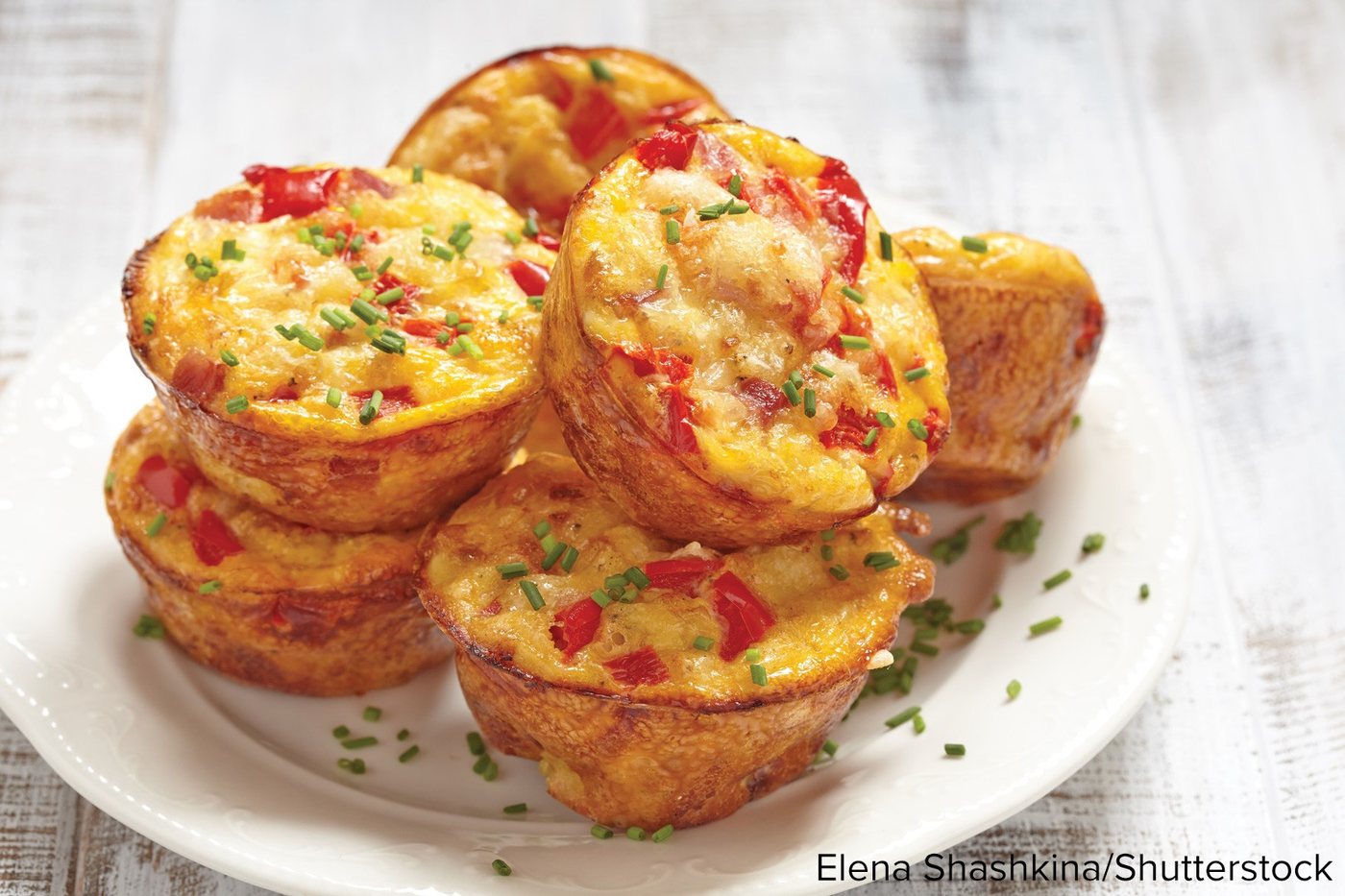
An egg muffin is about 60 calories. A plate holds 4 egg muffins. About how many calories are on the plate?
Three large boxes hold 240 cubic inches each. Two jumbo boxes hold 400 cubic inches each. Which is the correct volume comparison?
A student claims: “Greater box volume ALWAYS means more cereal inside.” Which is the best counterexample?
Partner Activity
Work with your partner on the practice problems at your differentiation path level. Explain each step using math vocabulary.
Check for Understanding #4
Teacher: If >30% thumbs down, re-teach with a fresh example before moving on.
Real-World Connection
🌍 Math in the Wild
A neighborhood group is building a community garden. To fill the beds they need soil — and to order the right amount, they need volume, measured precisely in cubic units. One design needs 48 cubic feet of soil.
✍️ Connection Reasoning
How can the group determine the amount of soil needed, and how can they check that their answer is accurate?
To find how much soil is needed, find the ___ of the garden beds. Because volume covers three dimensions, label the answer in ___ feet. Finding the volume two different ways and getting matching totals shows the solution is ___.
Turn & Talk — Connect
A community garden design needs 48 cubic feet of soil. Why must the group label their answer in cubic feet instead of just 'feet'?
👂 Listen For
A strong answer explains that volume measures length, width, and height together, so the unit must be cubed. A weak answer says 'because it's soil' without connecting to the three dimensions.
Extend: If the garden bed were only 24 cubic feet instead of 48, would the group need more or less soil? Justify using the cubic-feet reasoning.
Summarize: Math is Explaining and Sharing
Math Practices: Mathematical Arguments & Justification. 1. State a clear claim or conjecture supported by calculations. 2. Use accurate units and vocabulary (e.g. cubic units for volume). 3. Test with counterexamples to verify that the rule holds true every time
In your own words:
CLOSURE & REFLECT
⏱ ~8 min
Today I learned that ___ because ___.
One thing I am still not sure about is ___.
Which statement best captures what this lesson means by 'Math is Explaining and Sharing'?
Bonus Exit Check
The group found the volume by decomposing the garden into prisms and adding. Why would they compute it a SECOND, different way?
✍️ Show Your Work
Explain why your answer is correct using today's vocabulary.
Reflection & Self-Assessment
Continue Learning
Launch the Full Interactive Activity
Students continue practice in the HTML lesson engine with auto-check, hints, and differentiation.
Family Connection
Share tonight's family homework and discuss one vocabulary word at home.
Open Family Homework ↗Teacher Notes
⏱️ Pacing Guide
- Launch & vocab: 12 min
- I Do / We Do / You Do: 15 min
- Explore & practice: 15 min
- Connect & closure: 8 min
Total: ~45 min
🎯 Listen For · Common Errors
• A strong answer calculates both totals (720 and 800) and compares them to recommend the jumbo boxes. A weak answer picks an option without computing and comparing both volumes.
• Listen for students explaining that both types of arguments can convince someone, just using different evidence (numbers vs. reasoning). A weak answer dismisses word arguments as 'not real math.'
• A strong answer explains that volume measures length, width, and height together, so the unit must be cubed. A weak answer says 'because it's soil' without connecting to the three dimensions.
• Listen for students naming the multiplication strategy (4 groups of 60) rather than just stating '240.' A weak answer gives the number with no explanation.
Common mistake: Reporting volume without cubic units — saying the garden needs '48 feet' of soil, which is a length, or '48 square feet', which is an area.
Answer Key (Teacher Appendix)
Hide this slide during presentation or move to the end of your copy.
✓ Practice 1: 720 cubic inches vs. 800 cubic inches — the jumbo option holds more — 240 × 3 = 720 and 400 × 2 = 800; since 800 > 720, the two jumbo boxes hold more in total.
✓ Practice 2: 48 cubic feet — First bed: 4 × 3 × 2 = 24 cubic feet. Second bed: 6 × 2 × 2 = 24 cubic feet. Together: 24 + 24 = 48 cubic feet.
✓ Practice 3: If both ways give the same answer, the solution is accurate — The book models exactly this: two different decompositions both gave 48 cubic feet, so the solutions match and the answer is accurate.
✓ Practice 4: “I think the two jumbo boxes hold more cereal than the three large boxes.” — A conjecture is a mathematical claim you believe but have not yet proven — the jumbo-box claim needs an argument to back it up.
✓ Exit ticket: We communicate our reasoning, listen to classmates' arguments, decide whether they are convincing, and check our calculations for accuracy — The summary says it directly: we communicate our reasoning, make conjectures, listen and probe classmates' arguments, communicate precisely, label units accurately, and check that our calculations are accurate.