Math is Finding Patterns
I can find patterns and pattern rules, use them to make generalizations, and check my solutions with a table of values.
How to Use This Deck
Click Present or press F11 for fullscreen. Use arrow keys to advance.
Blue boxes show exactly what to say, ask, and how long to spend.
Text boxes, polls, and drag-sort save automatically in the browser.
Press N or click 📝 in the toolbar for pacing tips and answers.
Launch the full HTML activity for independent practice.
File → Print or the print button for handout copies.
🎯 Content Objective / Objetivo de contenido
I can find patterns and pattern rules, use them to make generalizations, and check my solutions with a table of values.
Today's Flow
Total pacing: ~45 min · Progress bar at top tracks your place
LAUNCH
⏱ ~10 min
⏱️ 3 MIN · THINK-PAIR-SHARE
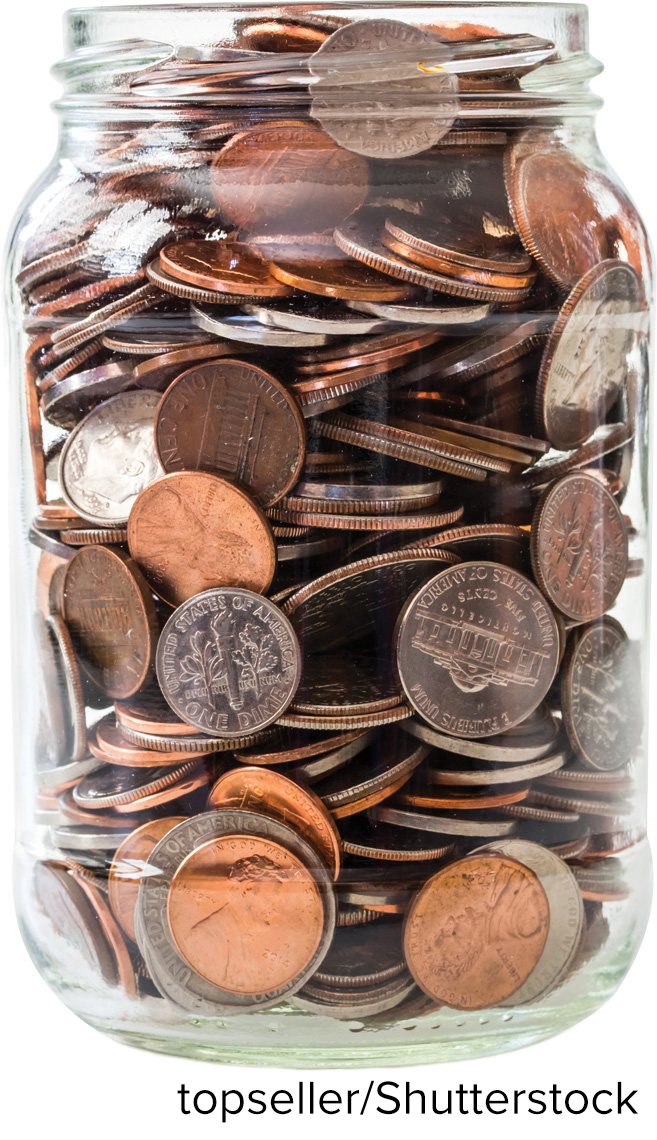
Akela's change jar has coins worth $53.50. Why is 'every 100 of a coin is worth 100 times one coin's value' a pattern, while 'Akela's jar holds $53.50' is not?
Check for Understanding #1
Teacher: If >30% thumbs down, re-teach with a fresh example before moving on.
Unit 1 · Lesson 5
Akela's change jar is full of pennies, nickels, dimes, and quarters. The value of the coins is $53.50. How many of each coin could be in the jar? There is more than one answer — and patterns are the way in.
Concept Launch
💡 When we do math, we look for patterns and relationships
The value of each coin is a pattern. Noticing patterns — and the calculations that repeat — lets us solve problems we could never solve by counting one coin at a time.
Math Practices: Patterns & Generalizations. 1. Organize observations into a table of values. 2. Identify the constant change or rule connecting inputs to outputs. 3. Write a general rule or expression to predict future terms
Check for Understanding #2
Teacher: If >30% thumbs down, re-teach with a fresh example before moving on.
Now you try
VOCABULARY
⏱ ~8 min
| Term / Término | Meaning / Significado | Example / Ejemplo | Visual |
|---|---|---|---|
| pattern patrón |
Something that repeats or changes in a predictable way. Algo que se repite o cambia de una manera predecible. |
The value of each type of coin is a pattern: 100 pennies make $1.00, 100 nickels make $5.00. | 1, 3, 7, 15, 31 — each tower's steps follow a predictable jump. |
| pattern rule regla del patrón |
The instruction that tells how to get from one number in a pattern to the next. La instrucción que dice cómo pasar de un número del patrón al siguiente. |
Player A's pattern rule is to add 2 after every made shot. | 2, 4, 6, 8 … the rule is “+ 2 every time”. |
| generalization generalización |
A statement that is true for a whole pattern, made by noticing repeated calculations. Una afirmación verdadera para todo un patrón, hecha al notar cálculos repetidos. |
Because the jar's total ends in 0, the number of pennies must be a multiple of 5. | 1 → 3, 2 → 5, 3 → 7 … so n → 2n + 1, for ANY n. |
| table of values tabla de valores |
A table that lists each step of a pattern so you can check that a solution is reasonable. Una tabla que muestra cada paso de un patrón para comprobar que una solución es razonable. |
Listing Player A's score after each shot: 20, 22, 24, … up to 38. | discs 1, 2, 3 beside steps 1, 3, 7 — one row per step. |
| reasonableness sensatez del resultado |
Whether an answer makes sense — checked as you work, with adjustments made when needed. Si una respuesta tiene sentido — se comprueba mientras trabajas y se ajusta cuando es necesario. |
The table verifies that Player A scored 38 points, so the calculation was correct. | 5/6 of 540 should land BELOW 540, so 650 fails the check. |
Which Word Fits?
Something that repeats or changes in a predictable way is a ___.
Use It In a Sentence
Check for Understanding #3
Teacher: If >30% thumbs down, re-teach with a fresh example before moving on.
Turn & Talk — Launch
Akela's change jar has coins worth $53.50. Why is 'every 100 of a coin is worth 100 times one coin's value' a pattern, while 'Akela's jar holds $53.50' is not?
👂 Listen For
A strong answer explains a pattern applies to any number of coins (it generalizes), while a fact like $53.50 is fixed to this one jar. A weak answer just labels each card without explaining the difference.
Extend: Is '100 pennies are worth $1.00' a pattern or a fact? Defend your answer using the pattern-versus-fact idea.
EXPLORE & PRACTICE
⏱ ~18 min
Visual Modeling Workspace
Use the drawing tray below to annotate the visual model. Teacher: say "Click to reveal" on key steps.
Explore Activity
Patterns keep going — they tell you what happens NEXT. One-time facts describe a single moment. The whale card is tricky: birth length starts a growth pattern of about 2.5 centimeters each day, so a starting value plus a rule is how patterns begin. After sorting, defend your trickiest placement to a partner.
✍️ Explore Discourse
Take a card you called 'A one-time fact.' What would have to keep happening for it to become a generalization instead — and how would you write that as a pattern rule?
Whiteboard Moment
Show your work clearly. Be ready to explain your thinking to a partner.
Turn & Talk — Explore
The whale card was tricky: 'a sei whale measures 4.5 meters at birth' is a starting value, and the growth pattern adds about 2.5 centimeters each day. Why does a pattern need BOTH a starting value and a rule?
👂 Listen For
A strong answer names both the starting value and the growth rule, and explains that both are needed to predict future terms. A weak answer names only one piece.
Extend: About how long would the sei whale be after 10 days, using the starting value and rule? Justify your calculation.
Practice Check A
Player A had 18 points before making 10 two-pointers in a row. How many points does Player A have after the streak?
✍️ Show Your Work
Explain why your answer is correct using today's vocabulary.
Practice Check B
Akela's jar totals $53.50. Why can the number of pennies only be a multiple of 5?
✍️ Show Your Work
Explain why your answer is correct using today's vocabulary.
Ratio Table Builder
Fill the ratio table. Each row must be equivalent.
| Factor | A | B |
|---|---|---|
| ×1 | ||
| ×2 | ||
| ×3 |
✍️ Justify Your Thinking
Sort each number pattern by its rule.
A classmate turned in the work below. One step has a mistake. Read every step, find it, name it, and fix it.
No worked steps provided for this lesson.
Choose ONE option to show what you know — then do it in the workspace below.
Use evidence from today's lesson to complete each frame.
Today's key idea is: "Math Practices: Patterns & Generalizations. 1. Organize observations into a table of values. 2. Identify the constant change or rule connecting inputs to outputs. 3. Write a general rule or expression to predict future terms" — and it works because ___.
Because pattern means ___, but a tricky part is ___, so I have to ___.
I can justify my method by showing ___, which proves my answer makes sense.
I can prove my answer is correct by ___, using pattern rule to check my work.
✍️ TWR · WRITE 3 SENTENCES · 7 MIN
Math Practices: Patterns & Generalizations. 1. Organize observations into a table of values. 2. Identify the constant change or rule connecting inputs to outputs. 3. Write a general rule or expression to predict future terms because ___
Math Practices: Patterns & Generalizations. 1. Organize observations into a table of values. 2. Identify the constant change or rule connecting inputs to outputs. 3. Write a general rule or expression to predict future terms but ___
Math Practices: Patterns & Generalizations. 1. Organize observations into a table of values. 2. Identify the constant change or rule connecting inputs to outputs. 3. Write a general rule or expression to predict future terms so ___
🌱 TWR · GROW THE KERNEL · 6 MIN
Answer these to add detail
Sentence starters (tap to use)
Student Workspace
Patterns keep going — they tell you what happens NEXT. One-time facts describe a single moment. The whale card is tricky: birth length starts a growth pattern of about 2.5 centimeters each day, so a starting value plus a rule is how patterns begin. After sorting, defend your trickiest placement to a partner.
| Column A | Column B |
|---|---|
✏️ Sketch Your Strategy
Differentiation Paths
Step-by-step with a worked model and sentence frames.
Each penny has a value of $0.01. What is the value of 100 pennies?
Player A had 18 points before making 10 two-pointers in a row. How many points does Player A have after the streak?
If both players kept their streaks going, after how many MORE shots would Player B tie Player A?
Partner Activity
Work with your partner on the practice problems at your differentiation path level. Explain each step using math vocabulary.
Check for Understanding #4
Teacher: If >30% thumbs down, re-teach with a fresh example before moving on.
Real-World Connection
🌍 Math in the Wild
Two basketball players make 10 shots in a row after scoring some points. Player A had scored 18 points before making 10 two-pointers in a row. Player B had 6 points before scoring 10 three-pointers in a row.
✍️ Connection Reasoning
How can pattern rules tell you how many points each player has after the streak — and how can a table of values prove your answer is reasonable?
Player A's pattern rule leads to a final score of ___ points. Player B's pattern rule leads to a final score of ___ points. Creating a ___ of values that checks each step confirms both totals are correct.
Turn & Talk — Connect
Player A had 18 points before making 10 two-pointers in a row. What pattern rule tells you Player A's final score, and how could a table prove it?
👂 Listen For
A strong answer calculates 18 + 2×10 = 38 and explains a table showing each shot's running total would confirm it. A weak answer states a final score with no table or verification method.
Extend: Player B had 6 points before scoring 10 three-pointers in a row. Whose final score is higher, Player A's or Player B's? Justify using both pattern rules.
Summarize: Math is Finding Patterns
Math Practices: Patterns & Generalizations. 1. Organize observations into a table of values. 2. Identify the constant change or rule connecting inputs to outputs. 3. Write a general rule or expression to predict future terms
In your own words:
CLOSURE & REFLECT
⏱ ~8 min
Today I learned that ___ because ___.
One thing I am still not sure about is ___.
Which statement best captures what this lesson means by 'Math is Finding Patterns'?
Bonus Exit Check
Which combination of coins totals exactly $53.50?
✍️ Show Your Work
Explain why your answer is correct using today's vocabulary.
Reflection & Self-Assessment
Continue Learning
Launch the Full Interactive Activity
Students continue practice in the HTML lesson engine with auto-check, hints, and differentiation.
Family Connection
Share tonight's family homework and discuss one vocabulary word at home.
Open Family Homework ↗Teacher Notes
⏱️ Pacing Guide
- Launch & vocab: 12 min
- I Do / We Do / You Do: 15 min
- Explore & practice: 15 min
- Connect & closure: 8 min
Total: ~45 min
🎯 Listen For · Common Errors
• A strong answer explains a pattern applies to any number of coins (it generalizes), while a fact like $53.50 is fixed to this one jar. A weak answer just labels each card without explaining the difference.
• A strong answer names both the starting value and the growth rule, and explains that both are needed to predict future terms. A weak answer names only one piece.
• A strong answer calculates 18 + 2×10 = 38 and explains a table showing each shot's running total would confirm it. A weak answer states a final score with no table or verification method.
• Listen for students naming the scaling pattern (100 times one coin's value) rather than just stating '$1.00.' A weak answer gives the answer with no pattern reasoning.
Common mistake: Reporting only the points from the streak (20 or 30) and forgetting to add the points each player had before the streak began.
Answer Key (Teacher Appendix)
Hide this slide during presentation or move to the end of your copy.
✓ Practice 1: 38 — Ten two-pointers add 10 × 2 = 20 points, and 18 + 20 = 38 points.
✓ Practice 2: Because the total's cents end in 0, and only pennies make amounts that aren't multiples of 5 cents — Nickels, dimes, and quarters are each worth a multiple of 5 cents. For the total to land on a 0, the pennies must also add up to a multiple of 5 cents — so their count is a multiple of 5.
✓ Practice 3: 200 quarters, 25 dimes, 15 nickels, 25 pennies — $50.00 + $2.50 + $0.75 + $0.25 = $53.50 exactly.
✓ Practice 4: It lists the score after every shot, so you can see the pattern land exactly on 38 — The book's table lists each step — 20, 22, 24, … — and verifies that the calculations were correct: Player A scored 38.
✓ Exit ticket: We look for patterns and relationships, use them to solve problems and make generalizations, and check our solutions for reasonableness — The summary lists exactly this: we look for patterns and relationships, use them to solve problems, notice repeated calculations to make generalizations, and evaluate the reasonableness of our solutions as we work.