Math is Ours
I can describe my problem-solving process, name strategies for getting unstuck, and identify the behaviors that make our class a community of math thinkers.
How to Use This Deck
Click Present or press F11 for fullscreen. Use arrow keys to advance.
Blue boxes show exactly what to say, ask, and how long to spend.
Text boxes, polls, and drag-sort save automatically in the browser.
Press N or click 📝 in the toolbar for pacing tips and answers.
Launch the full HTML activity for independent practice.
File → Print or the print button for handout copies.
🎯 Content Objective / Objetivo de contenido
I can describe my problem-solving process, name strategies for getting unstuck, and identify the behaviors that make our class a community of math thinkers.
Today's Flow
Total pacing: ~45 min · Progress bar at top tracks your place
LAUNCH
⏱ ~10 min
⏱️ 3 MIN · THINK-PAIR-SHARE
One bike rack holds 8 bikes with 2 wheels each, and another rack has 6 times as many wheels. Think about the last time you worked with someone to solve a problem like this — what did you actually DO first?
Check for Understanding #1
Teacher: If >30% thumbs down, re-teach with a fresh example before moving on.
Unit 1 · Lesson 6
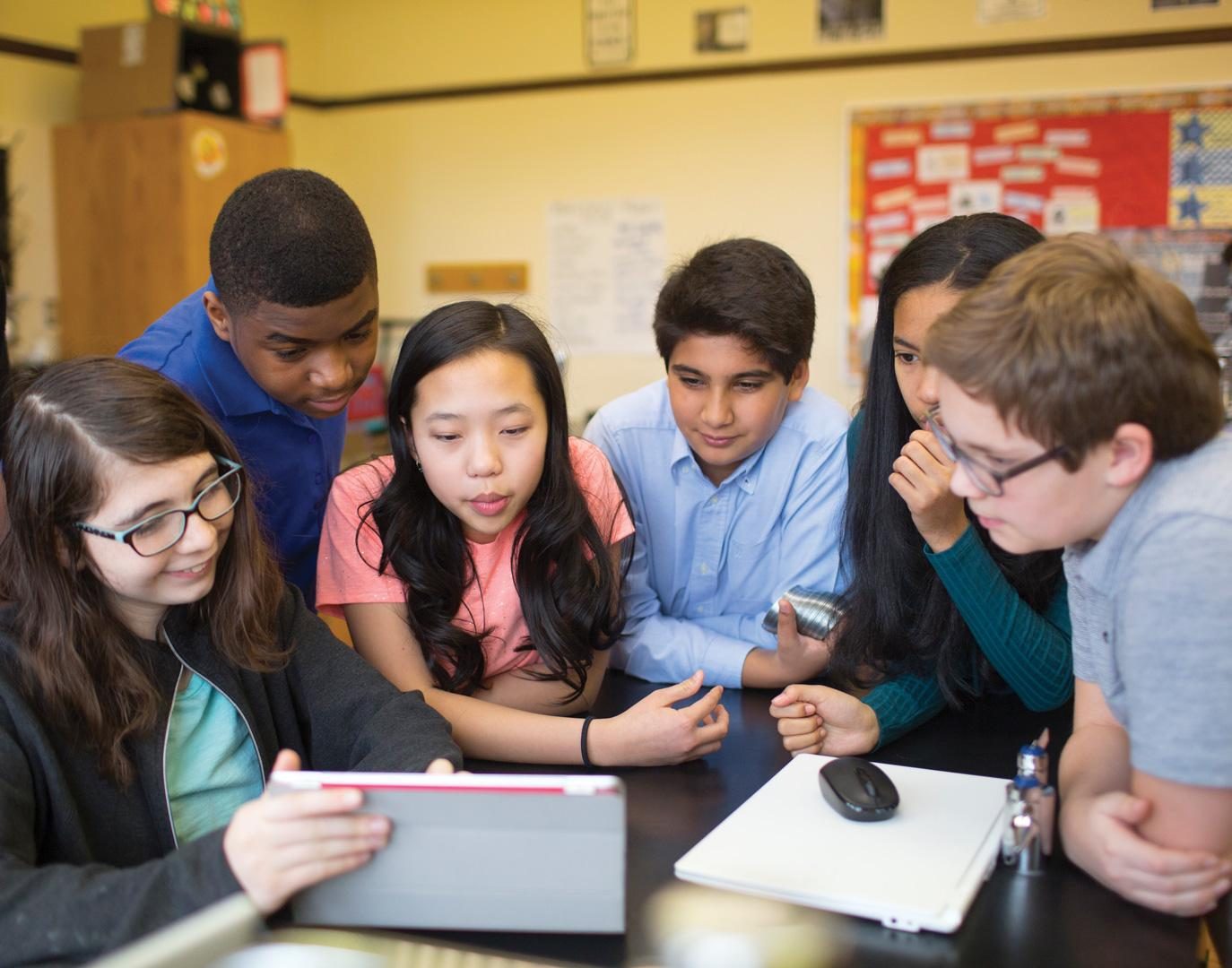
What is math? This lesson's answer: math is about DOING — solving problems, getting stuck, trying again, and doing it together. Think about the last time you worked with someone to solve a math problem. What did you actually do?
Concept Launch
💡 When we do math, we solve problems
Problem solving is not one lightning bolt — it is a process you can name, practice, and share. And when the process stalls, getting stuck is part of doing math, not a sign you can't.
Math Practices: Collaboration & Critique. 1. Explain your reasoning using precise mathematical language. 2. Listen actively to partner strategies and compare approaches. 3. Build on shared agreements to reach consensus
Check for Understanding #2
Teacher: If >30% thumbs down, re-teach with a fresh example before moving on.
Now you try
VOCABULARY
⏱ ~8 min
| Term / Término | Meaning / Significado | Example / Ejemplo | Visual |
|---|---|---|---|
| make sense of a problem comprender un problema |
To figure out what a problem is asking — what you know, and what you don't know yet. Descubrir qué pide un problema: qué sabes y qué no sabes todavía. |
Before computing, I ask: what is this problem really asking me to find? | KNOW: 16 wheels, 6 times as many. DON'T KNOW: how many bikes. |
| representation representación |
A way of showing a problem — a drawing, table, equation, or model — that helps you see it. Una forma de mostrar un problema — un dibujo, una tabla, una ecuación o un modelo — que te ayuda a verlo. |
Drawing the bicycle rack instead of only imagining it. | The same 12 shown three ways: a tape diagram, a table, and 3 × 4. |
| strategy estrategia |
A plan of attack for a problem — and something you can switch when you get stuck. Un plan para atacar un problema — y algo que puedes cambiar cuando te atascas. |
When I got stuck, I tried thinking of a problem I had seen like this before. | “I will draw a tape diagram first, then divide” — chosen before computing. |
| critique criticar constructivamente |
To examine an idea and say what is convincing or not — about the idea, never about the person. Examinar una idea y decir qué es convincente o no — sobre la idea, nunca sobre la persona. |
We critique the ideas of others, not our classmates. | “That step assumes the boxes are full — how do we know?” |
| community agreement acuerdo comunitario |
A rule the whole class agrees to so that everyone can learn together. Una norma que toda la clase acepta para que todos puedan aprender juntos. |
We take turns when sharing ideas. | “We take turns sharing, and we critique ideas, not people.” |
Which Word Fits?
To work out what a problem asks — what you know and don't — is to ___ ___ ___ ___ ___.
Use It In a Sentence
Check for Understanding #3
Teacher: If >30% thumbs down, re-teach with a fresh example before moving on.
Turn & Talk — Launch
One bike rack holds 8 bikes with 2 wheels each, and another rack has 6 times as many wheels. Think about the last time you worked with someone to solve a problem like this — what did you actually DO first?
👂 Listen For
A strong answer names a specific first move (like finding 8×2=16 before tackling '6 times as many') rather than jumping to the final answer. A weak answer just states a number with no process described.
Extend: How many wheels are on the second rack, and how do you know your process for finding it was reasonable?
EXPLORE & PRACTICE
⏱ ~18 min
Visual Modeling Workspace
Use the drawing tray below to annotate the visual model. Teacher: say "Click to reveal" on key steps.
Explore Activity
Both columns are real math. The left column is how a solution starts; the right column is how a stalled solution gets moving again. After sorting, star the get-unstuck move you will actually try next time.
✍️ Explore Discourse
Compare your two sorts. Which move belongs BEFORE you're stuck and which one only helps AFTER the plan stalls — and how would you tell a classmate which one they need right now?
Whiteboard Moment
Show your work clearly. Be ready to explain your thinking to a partner.
Turn & Talk — Explore
You sorted moves like 'look for patterns' as making-sense moves and 'ask a classmate a question' as getting-unstuck moves. Why are BOTH columns considered real math, not just the planning column?
👂 Listen For
A strong answer explains that getting unstuck moves (asking questions, redrawing) are legitimate problem-solving steps, not signs you can't do math. A weak answer treats the get-unstuck column as less valuable than planning.
Extend: Star the get-unstuck move you will actually try next time you're stuck, and explain why you chose it over the others.
Practice Check A
You are solving a problem and realize your strategy is not making progress. What does the problem-solving process say to do?
✍️ Show Your Work
Explain why your answer is correct using today's vocabulary.
Practice Check B
The first rack has 16 wheels and the other rack has 6 times as many. How many BIKES does the bigger rack hold, if every bike has 2 wheels?
✍️ Show Your Work
Explain why your answer is correct using today's vocabulary.
Ratio Table Builder
Fill the ratio table. Each row must be equivalent.
| Factor | A | B |
|---|---|---|
| ×1 | ||
| ×2 | ||
| ×3 |
✍️ Justify Your Thinking
Sort each behavior: does it build our math community, or hurt it?
A classmate turned in the work below. One step has a mistake. Read every step, find it, name it, and fix it.
No worked steps provided for this lesson.
Choose ONE option to show what you know — then do it in the workspace below.
Use evidence from today's lesson to complete each frame.
Today's key idea is: "Math Practices: Collaboration & Critique. 1. Explain your reasoning using precise mathematical language. 2. Listen actively to partner strategies and compare approaches. 3. Build on shared agreements to reach consensus" — and it works because ___.
Because make sense of a problem means ___, but a tricky part is ___, so I have to ___.
I can justify my method by showing ___, which proves my answer makes sense.
I can prove my answer is correct by ___, using representation to check my work.
✍️ TWR · WRITE 3 SENTENCES · 7 MIN
Math Practices: Collaboration & Critique. 1. Explain your reasoning using precise mathematical language. 2. Listen actively to partner strategies and compare approaches. 3. Build on shared agreements to reach consensus because ___
Math Practices: Collaboration & Critique. 1. Explain your reasoning using precise mathematical language. 2. Listen actively to partner strategies and compare approaches. 3. Build on shared agreements to reach consensus but ___
Math Practices: Collaboration & Critique. 1. Explain your reasoning using precise mathematical language. 2. Listen actively to partner strategies and compare approaches. 3. Build on shared agreements to reach consensus so ___
🌱 TWR · GROW THE KERNEL · 6 MIN
Answer these to add detail
Sentence starters (tap to use)
Student Workspace
Both columns are real math. The left column is how a solution starts; the right column is how a stalled solution gets moving again. After sorting, star the get-unstuck move you will actually try next time.
| Column A | Column B |
|---|---|
✏️ Sketch Your Strategy
Differentiation Paths
Step-by-step with a worked model and sentence frames.
A bicycle rack holds 8 bikes, and each bike has 2 wheels. How many wheels are on the rack?
You are solving a problem and realize your strategy is not making progress. What does the problem-solving process say to do?
A group solves a hard problem, but one student did all the talking while three stayed silent. By this lesson's standards, how did the GROUP do?
Partner Activity
Work with your partner on the practice problems at your differentiation path level. Explain each step using math vocabulary.
Check for Understanding #4
Teacher: If >30% thumbs down, re-teach with a fresh example before moving on.
Real-World Connection
🌍 Math in the Wild
Communities often have agreements that all members agree to in order to be part of the community. Our math class is a community of thinkers and doers — when we work together we listen attentively, share our thinking, respect others' ideas, critique ideas (not classmates), and take turns. When we work alone we stay focused, seek help when stuck, and respect classmates' boundaries.
✍️ Connection Reasoning
What ideas do you recommend that the whole class agrees to so that math class is a community of learners?
Propose a class agreement for working ___, and another for working alone, based on showing ___ for classmates. State each idea as a clear class ___ that helps everyone learn.
Turn & Talk — Connect
Our class is a community of thinkers and doers. What class agreement would you propose for working together, and how does it show respect for classmates?
👂 Listen For
A strong answer proposes a specific, actionable agreement (not a vague 'be nice') and connects it to respecting ideas versus people. A weak answer offers a generic rule with no connection to respect.
Extend: How is your working-together agreement different from an agreement for working alone? Give one agreement for each.
Summarize: Math is Ours
Math Practices: Collaboration & Critique. 1. Explain your reasoning using precise mathematical language. 2. Listen actively to partner strategies and compare approaches. 3. Build on shared agreements to reach consensus
In your own words:
CLOSURE & REFLECT
⏱ ~8 min
Today I learned that ___ because ___.
One thing I am still not sure about is ___.
Which statement best captures what this lesson means by 'Math is Ours'?
Bonus Exit Check
You are working on your own and get stuck. Which move follows BOTH parts of our working-alone agreements?
✍️ Show Your Work
Explain why your answer is correct using today's vocabulary.
Reflection & Self-Assessment
Continue Learning
Launch the Full Interactive Activity
Students continue practice in the HTML lesson engine with auto-check, hints, and differentiation.
Family Connection
Share tonight's family homework and discuss one vocabulary word at home.
Open Family Homework ↗Teacher Notes
⏱️ Pacing Guide
- Launch & vocab: 12 min
- I Do / We Do / You Do: 15 min
- Explore & practice: 15 min
- Connect & closure: 8 min
Total: ~45 min
🎯 Listen For · Common Errors
• A strong answer names a specific first move (like finding 8×2=16 before tackling '6 times as many') rather than jumping to the final answer. A weak answer just states a number with no process described.
• A strong answer explains that getting unstuck moves (asking questions, redrawing) are legitimate problem-solving steps, not signs you can't do math. A weak answer treats the get-unstuck column as less valuable than planning.
• A strong answer proposes a specific, actionable agreement (not a vague 'be nice') and connects it to respecting ideas versus people. A weak answer offers a generic rule with no connection to respect.
• Listen for students describing the two-step process (find 16 wheels first, then multiply by 6) rather than a single guess. A weak answer skips the first step of finding 16.
Common mistake: Treating 'stuck' as a stop sign instead of a signal — waiting silently instead of trying a strategy: asking a question, drawing the problem, or recalling a similar problem.
Answer Key (Teacher Appendix)
Hide this slide during presentation or move to the end of your copy.
✓ Practice 1: Notice your progress has stalled and shift to a different strategy — We are aware of our progress in solving the problem and shift strategies when needed.
✓ Practice 2: 48 — The bigger rack has 16 × 6 = 96 wheels, and 96 ÷ 2 = 48 bikes.
✓ Practice 3: Try a get-unstuck strategy first, then quietly ask for help without interrupting classmates unnecessarily — When we work on our own, we seek help when we are stuck AND we avoid interrupting our classmates unnecessarily — the best move honors both.
✓ Practice 4: 16 — 8 bikes with 2 wheels each is 8 × 2 = 16 wheels.
✓ Exit ticket: We are a community of math thinkers and doers — we work together and on our own, showing respect for our classmates, our community, ourselves, and our math ideas — The summary says it directly: we are a community of math thinkers and doers; we often work together, sometimes work on our own, and show respect and consideration for our classmates, our community, ourselves, and our math ideas.