Math is Beauty
I can use bilateral symmetry to describe structure in nature and in human creations.
How to Use This Deck
Click Present or press F11 for fullscreen. Use arrow keys to advance.
Blue boxes show exactly what to say, ask, and how long to spend.
Text boxes, polls, and drag-sort save automatically in the browser.
Press N or click 📝 in the toolbar for pacing tips and answers.
Launch the full HTML activity for independent practice.
File → Print or the print button for handout copies.
🎯 Content Objective / Objetivo de contenido
I can use bilateral symmetry to describe structure in nature and in human creations.
Today's Flow
Total pacing: ~45 min · Progress bar at top tracks your place
LAUNCH
⏱ ~10 min
⏱️ 3 MIN · THINK-PAIR-SHARE
The butterfly's two wings are mirror images across a line down the middle of its body. Why does drawing that line matter for proving the butterfly is symmetric?
Check for Understanding #1
Teacher: If >30% thumbs down, re-teach with a fresh example before moving on.
Unit 10 · Lesson 2
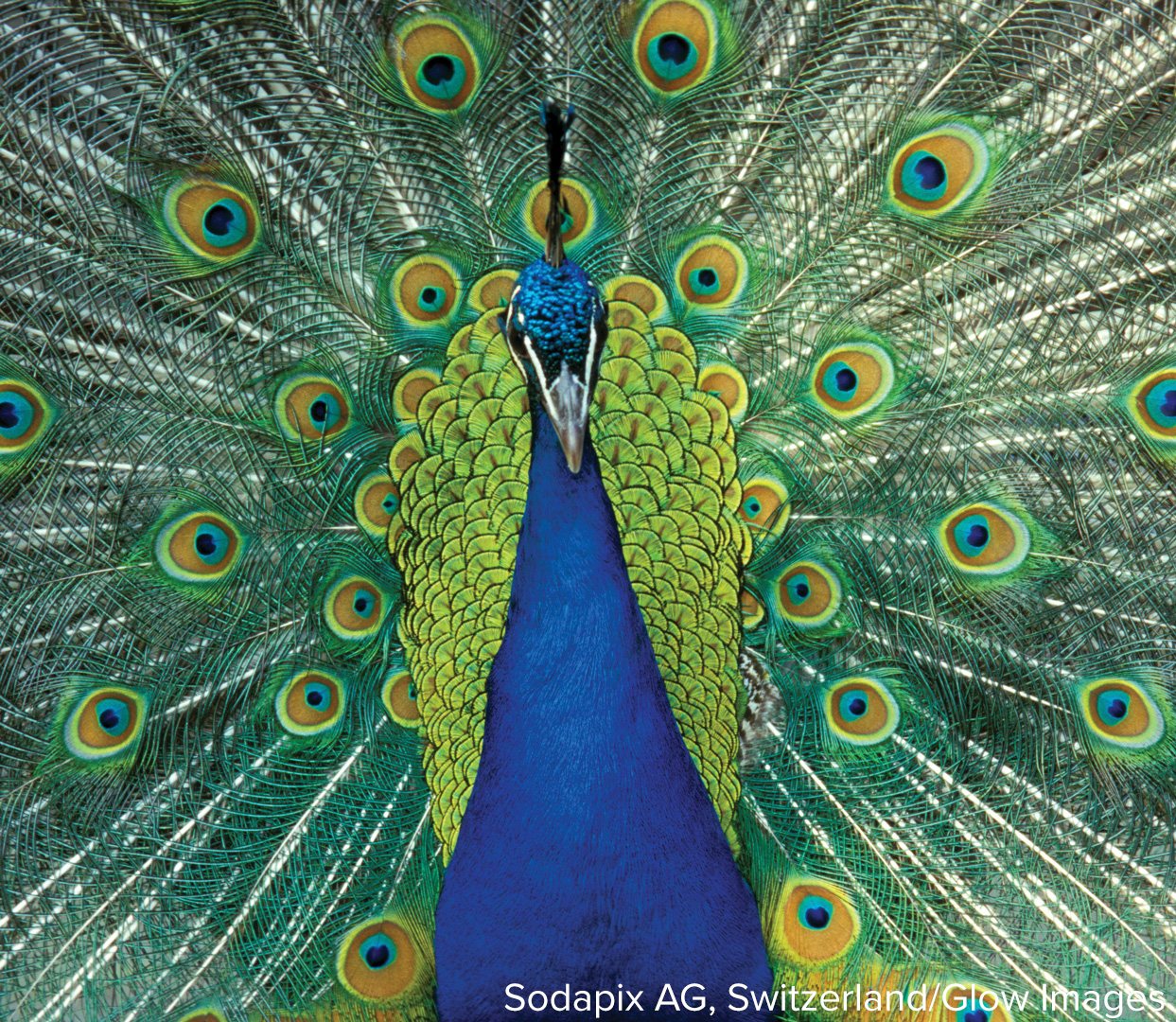
There are over 17,000 species of butterflies in the world, and most people are fascinated by them. Part of the fascination is mathematical: math creates beautiful designs, many of which are found naturally in plants and animals.
Concept Launch
💡 Math creates beautiful designs in nature
Look closely at a butterfly's wings, then at how a plant grows its leaves. The same mathematical idea keeps appearing.
Symmetry, Geometry & Design. 1. Line of Symmetry: Divides a figure into two congruent mirror-image halves. 2. Rotational Symmetry: Shape rotates onto itself in less than a full 360° turn. 3. Geometric transformations preserve angle measures and side lengths
Check for Understanding #2
Teacher: If >30% thumbs down, re-teach with a fresh example before moving on.
Now you try
VOCABULARY
⏱ ~8 min
| Term / Término | Meaning / Significado | Example / Ejemplo | Visual |
|---|---|---|---|
| symmetric simétrico |
Having two halves that match — one side is a mirror image of the other. Que tiene dos mitades que coinciden: un lado es la imagen reflejada del otro. |
The two sides of the butterfly look like mirror images. The butterfly is symmetric. | A butterfly: the left wing is the mirror of the right. |
| mirror image imagen reflejada |
A copy of a figure flipped across a line, so the two halves face each other. Una copia de una figura volteada al otro lado de una línea, de modo que las dos mitades se miran entre sí. |
The left wing of a butterfly is a mirror image of the right wing. | Fold the layer down the middle: each leaf lands on its partner. |
| bilateral symmetry simetría bilateral |
Reflective symmetry in plants and animals — the two sides of the body mirror each other. La simetría reflectiva en plantas y animales: los dos lados del cuerpo se reflejan entre sí. |
All butterflies have reflective symmetry; in plants and animals this is called bilateral symmetry. | All 17,000+ butterfly species have it — two sides, one mirror line. |
| line of symmetry eje de simetría |
The line you can draw through a figure so each side is a reflection of the other. La línea que puedes trazar por una figura de modo que cada lado sea el reflejo del otro. |
We can draw a line down the middle of the layer of leaves, along the center of each leaf. | The line straight down the butterfly's body. |
| balance equilibrio |
An even, steady arrangement — neither side feels heavier than the other. Una disposición pareja y estable: ningún lado se siente más pesado que el otro. |
Our brains are wired to favor balance, and bilateral symmetry provides balance. | Two matching halves — neither side feels heavier than the other. |
Which Word Fits?
Having two halves that match as mirror images is being ___.
Use It In a Sentence
Check for Understanding #3
Teacher: If >30% thumbs down, re-teach with a fresh example before moving on.
Turn & Talk — Launch
The butterfly's two wings are mirror images across a line down the middle of its body. Why does drawing that line matter for proving the butterfly is symmetric?
👂 Listen For
A strong answer explains the line gives you something to compare the two sides across — without it, you can't test whether the sides actually match. A weak answer just says 'it looks the same.'
Extend: Could a butterfly still be symmetric if its line of symmetry ran at an angle instead of straight down the middle? Justify your answer.
EXPLORE & PRACTICE
⏱ ~18 min
Visual Modeling Workspace
Use the drawing tray below to annotate the visual model. Teacher: say "Click to reveal" on key steps.
Explore Activity
Test each one the same way: imagine drawing a line down the middle. If one side is a mirror image of the other, it has bilateral symmetry. After sorting, name where the line of symmetry runs on one card from the left column.
✍️ Explore Discourse
Find something in this room that you think has bilateral symmetry and your partner thinks does not. Where exactly would the line of symmetry go, and what makes the two halves mirror images rather than just similar?
Whiteboard Moment
Show your work clearly. Be ready to explain your thinking to a partner.
Turn & Talk — Explore
When you sorted cards into 'has bilateral symmetry' and 'no bilateral symmetry,' why did the letter R end up in the 'no' column while a ladybug seen from above ended up in the 'yes' column?
👂 Listen For
Listen for students applying the same mirror-line test to both cards, not just stating an opinion about which 'looks' symmetric.
Extend: The spiral snail shell was sorted into 'no bilateral symmetry.' Could you argue it has a DIFFERENT kind of symmetry? What would you call it?
Practice Check A
Why do people find symmetry pleasing?
✍️ Show Your Work
Explain why your answer is correct using today's vocabulary.
Practice Check B
There are over 17,000 species of butterflies, and ALL butterflies have reflective symmetry. About how many of those species have reflective symmetry?
✍️ Show Your Work
Explain why your answer is correct using today's vocabulary.
Net Fold Explorer
Complete the interactive activity using today's strategy.
✍️ Justify Your Thinking
Sort each figure: does it have at least one line of symmetry, or none?
A classmate turned in the work below. One step has a mistake. Read every step, find it, name it, and fix it.
No worked steps provided for this lesson.
Choose ONE option to show what you know — then do it in the workspace below.
Use evidence from today's lesson to complete each frame.
Today's key idea is: "Symmetry, Geometry & Design. 1. Line of Symmetry: Divides a figure into two congruent mirror-image halves. 2. Rotational Symmetry: Shape rotates onto itself in less than a full 360° turn. 3. Geometric transformations preserve angle measures and side lengths" — and it works because ___.
Because symmetric means ___, but a tricky part is ___, so I have to ___.
I can justify my method by showing ___, which proves my answer makes sense.
I can prove my answer is correct by ___, using mirror image to check my work.
✍️ TWR · WRITE 3 SENTENCES · 7 MIN
Symmetry, Geometry & Design. 1. Line of Symmetry: Divides a figure into two congruent mirror-image halves. 2. Rotational Symmetry: Shape rotates onto itself in less than a full 360° turn. 3. Geometric transformations preserve angle measures and side lengths because ___
Symmetry, Geometry & Design. 1. Line of Symmetry: Divides a figure into two congruent mirror-image halves. 2. Rotational Symmetry: Shape rotates onto itself in less than a full 360° turn. 3. Geometric transformations preserve angle measures and side lengths but ___
Symmetry, Geometry & Design. 1. Line of Symmetry: Divides a figure into two congruent mirror-image halves. 2. Rotational Symmetry: Shape rotates onto itself in less than a full 360° turn. 3. Geometric transformations preserve angle measures and side lengths so ___
🌱 TWR · GROW THE KERNEL · 6 MIN
Answer these to add detail
Sentence starters (tap to use)
Student Workspace
Test each one the same way: imagine drawing a line down the middle. If one side is a mirror image of the other, it has bilateral symmetry. After sorting, name where the line of symmetry runs on one card from the left column.
| Column A | Column B |
|---|---|
✏️ Sketch Your Strategy
Differentiation Paths
Step-by-step with a worked model and sentence frames.
What does it mean that a butterfly is symmetric?
Why do people find symmetry pleasing?
Your friend insists that only ONE of two flowers has bilateral symmetry, but both pass the mirror-image test — just across lines pointing in different directions. What is the best response?
Partner Activity
Work with your partner on the practice problems at your differentiation path level. Explain each step using math vocabulary.
Check for Understanding #4
Teacher: If >30% thumbs down, re-teach with a fresh example before moving on.
Real-World Connection
🌍 Math in the Wild
Your friend insists that only one of two flowers has bilateral symmetry. One flower's petals mirror each other across a line down its center; the other flower does too, just along a different line.
✍️ Connection Reasoning
How do you respond to your friend?
To settle the disagreement, draw a ___ through the center of each flower and check whether one side is a ___ of the other. If the test works for both, then ___ flowers have bilateral symmetry.
Turn & Talk — Connect
A plant grows in layers, with 2 mirror-image leaves per layer. After 4 layers, how many leaves are there, and how does that connect to bilateral symmetry?
👂 Listen For
A strong answer multiplies 4 × 2 = 8 correctly AND explains that each pair within a layer is a mirror image. A weak answer gives only the leaf count with no symmetry connection.
Extend: If a plant grew 6 layers instead of 4, how many leaves would it have, and would each layer still show bilateral symmetry? Explain.
Summarize: Math is Beauty
Symmetry, Geometry & Design. 1. Line of Symmetry: Divides a figure into two congruent mirror-image halves. 2. Rotational Symmetry: Shape rotates onto itself in less than a full 360° turn. 3. Geometric transformations preserve angle measures and side lengths
In your own words:
CLOSURE & REFLECT
⏱ ~8 min
Today I learned that ___ because ___.
One thing I am still not sure about is ___.
Which statement best shows what this lesson means by 'math is beauty'?
Bonus Exit Check
A plant grows 2 leaves at a time, one layer per week. How many leaves has it grown after 6 weeks?
✍️ Show Your Work
Explain why your answer is correct using today's vocabulary.
Reflection & Self-Assessment
Continue Learning
Launch the Full Interactive Activity
Students continue practice in the HTML lesson engine with auto-check, hints, and differentiation.
Family Connection
Share tonight's family homework and discuss one vocabulary word at home.
Open Family Homework ↗Teacher Notes
⏱️ Pacing Guide
- Launch & vocab: 12 min
- I Do / We Do / You Do: 15 min
- Explore & practice: 15 min
- Connect & closure: 8 min
Total: ~45 min
🎯 Listen For · Common Errors
• A strong answer explains the line gives you something to compare the two sides across — without it, you can't test whether the sides actually match. A weak answer just says 'it looks the same.'
• Listen for students applying the same mirror-line test to both cards, not just stating an opinion about which 'looks' symmetric.
• A strong answer multiplies 4 × 2 = 8 correctly AND explains that each pair within a layer is a mirror image. A weak answer gives only the leaf count with no symmetry connection.
• Listen for students naming a specific checking strategy tied to finding SOME line, not just "I looked at it." They should connect steps to the key idea.
Common mistake: Thinking a figure lacks bilateral symmetry just because its line of symmetry is not vertical — the mirror line can run in any direction, and the test is whether the two sides match across it.
Answer Key (Teacher Appendix)
Hide this slide during presentation or move to the end of your copy.
✓ Practice 1: Our brains are wired to favor balance, and bilateral symmetry provides balance — The lesson says it directly: our brains are wired to favor balance, and bilateral symmetry provides balance.
✓ Practice 2: All 17,000+ of them — 'All butterflies have reflective symmetry' means every one of the 17,000+ species — no exceptions.
✓ Practice 3: 12 leaves — One layer per week for 6 weeks is 6 layers, and 6 layers × 2 leaves = 12 leaves.
✓ Practice 4: Find a line where one side is the mirror image of the other — Bilateral symmetry means exactly this: there is a line across which the two sides are mirror images.
✓ Exit ticket: Math creates beautiful designs like bilateral symmetry, found in nature and used in human art, music, and architecture — The summary makes the claim in two parts: bilateral symmetry appears naturally in many plants and animals, and it also influences human creations from art to music to architecture.