
Learning Lab (Practice HTML) · Unit 2 · Lesson 2-1 · 6.DS.1

Understand Statistical Questions

I can tell the difference between a statistical question and a non-statistical question.

Your work saves on this device.Tu trabajo se guarda en este dispositivo.

Start the Learning LabEmpezar el Learning Lab or go straight to practice:o ve directo a practicar: Regular ChallengeReto

Stage 1 of 5Etapa 1 de 5

ExploreExplora

Will the Answers Vary?

Start hereEmpieza aquí

Background knowledgeConocimientos previos2 skills you need for today: Count tally marks · Compare two bars on a bar graphLas 2 destrezas que necesitas hoy: Contar marcas de conteo · Comparar dos barras en una gráfica de barras

🔑 Background knowledgeConocimientos previos

Learn it, see it, then try one quick question.Apréndelo, míralo y luego prueba una pregunta rápida.

Statistical Questions and DataPreguntas estadísticas y datos: A statistical question expects varied answers that can be collected as data.Una pregunta estadística espera respuestas variadas que se pueden recopilar como datos.

  1. Read the words below.Lee las palabras de abajo.
  2. Open the model and change one number at a time.Abre el modelo y cambia un número a la vez.
  3. Answer the questions beside the model, one at a time.Responde las preguntas junto al modelo, una a la vez.

Words to knowPalabras clave

  • Statistical QuestionPregunta estadística

    A question answered with data that are expected to vary.Una pregunta que se responde con datos que se espera que varíen.

    “How tall are the players on the team?” → answers vary: 60 in, 63 in, 58 in, 65 in

  • Non-statistical QuestionPregunta no estadística

    A question that does not anticipate variability in the data used to answer it. It may ask for one fact or measurement.Una pregunta que no anticipa variabilidad en los datos usados para responderla. Puede pedir un solo dato o una medición.

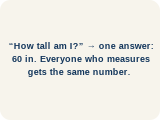
    “How tall am I?” → one answer: 60 in. Everyone who measures gets the same number.

  • DataDatos

    Facts and numbers you collect, like answers to a survey.Datos y números que recoges, como respuestas a una encuesta.

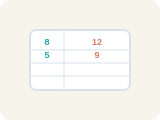
    Player heights: 60 in, 63 in, 58 in, 65 in — four different measurements

  • VariabilityVariabilidad

    How spread out the numbers are.Qué tan separados están los números.

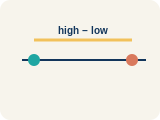
    Scores 10, 12, 11 are close together (low variability); scores 2, 15, 30 are far apart (high variability)

Stage 2 of 5Etapa 2 de 5

UnderstandComprende

Read the idea, follow the worked examples, and connect the picture to the numbers.Lee la idea, sigue los ejemplos resueltos y conecta el dibujo con los números.

Step 1 of 9:Paso 1 de 9: Words to knowPalabras clave

Say what each word means, then tap the card to check.Di qué significa cada palabra y luego toca la tarjeta para comprobar.

Stage 3 of 5Etapa 3 de 5

PracticePractica

Choose Regular or Challenge. Hints come one step at a time; you get a new question after a worked example.Elige Regular o Reto. Las pistas llegan paso a paso; después de un ejemplo resuelto recibes una pregunta nueva.

Loading practice…

Stage 4 of 5Etapa 4 de 5

ApplyAplica

Use the idea in a real situation. Write your reasoning, then compare it with a sample.Usa la idea en una situación real. Escribe tu razonamiento y compáralo con un ejemplo.

Apply in context: Practice minutesAplica en contexto: Minutos de práctica

Mia asked 40 sixth graders, "How many minutes do you practice an instrument each week?" Twelve said 0 minutes, 9 said 30 minutes, and 11 said 60 minutes. The rest said 90 minutes. How many students practice 60 minutes or more?Mia les preguntó a 40 estudiantes de sexto grado: "¿Cuántos minutos practicas un instrumento cada semana?" Doce dijeron 0 minutos, 9 dijeron 30 minutos y 11 dijeron 60 minutos. El resto dijo 90 minutos. ¿Cuántos estudiantes practican 60 minutos o más?

Step 1 · Guide mePaso 1 · Guíame

How many students said 0, 30, or 60 minutes?¿Cuántos estudiantes dijeron 0, 30 o 60 minutos?

studentsestudiantes

Step 2 · Final answerPaso 2 · Respuesta final

studentsestudiantes

Real-world connectionConexión con el mundo real

The school newspaper wants to write a story about the girls' soccer team. A reporter suggests asking: "How many goals has the team scored total?" The editor says they should ask: "How many goals did each player score this season?"El periódico escolar quiere escribir una nota sobre el equipo de fútbol de las niñas. Un reportero sugiere preguntar: «¿Cuántos goles ha anotado el equipo en total?» La editora dice que deberían preguntar: «¿Cuántos goles anotó cada jugadora esta temporada?»

Goals Scored This Season — One Dot per PlayerGoles anotados esta temporada — un punto por jugador

0123456

Every player answers the editor's question differently — the dots spread from 0 to 6 goals. The reporter's question has only one answer: the total.Cada jugador responde la pregunta del editor de manera distinta — los puntos se reparten de 0 a 6 goles. La pregunta del reportero tiene una sola respuesta: el total.

Question:Pregunta: Which question is statistical? Why would the editor's question give the newspaper more interesting data?¿Qué pregunta es estadística? ¿Por qué la pregunta de la editora le daría al periódico datos más interesantes?

The reporter's question is because . The editor's question is because . The editor's question is better for a story because .La pregunta del reportero es porque . La pregunta del editor es porque . La pregunta del editor es mejor para una historia porque .

Reasoning challengeReto de razonamiento

Write one statistical question and one non-statistical question about your school's cafeteria. Explain why each question is or is not statistical, and describe what the data would look like for the statistical question.Escribe una pregunta estadística y una pregunta no estadística sobre la cafetería de tu escuela. Explica por qué cada pregunta es o no es estadística y describe cómo se verían los datos de la pregunta estadística.

Statistical question: ___. This is statistical because ___. The data might look like: ___. Non-statistical question: ___. This is not statistical because ___.

Create & verify: Understand Statistical QuestionsCrea y verifica

Write one statistical question about your class and one non-statistical question about the same topic. Explain why the first expects variability and the second has only one answer.Escribe una pregunta estadística sobre tu clase y una pregunta no estadística sobre el mismo tema. Explica por qué la primera espera variabilidad y la segunda tiene una sola respuesta.

Quick test bench (try numbers or expressions)Banco de prueba rápido (prueba números o expresiones)

Self-check rubricLista de verificación

Stage 5 of 5Etapa 5 de 5

ReflectReflexiona

Answer on your own. Your first try counts as independent evidence; you can still revise.Responde por tu cuenta. Tu primer intento cuenta como evidencia independiente; todavía puedes revisar.

Loading…