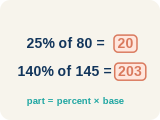
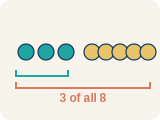
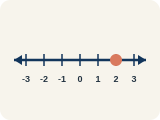
Background knowledgeConocimientos previos2 skills you need for today: Scale a ratio table down, then up · Undo multiplying with divisionLas 2 destrezas que necesitas hoy: Reducir y luego ampliar una tabla de razones · Deshacer una multiplicación con una división
Determine the Whole Given the Part and PercentHallar el total dados la parte y el porcentaje:Working backwards from a part and its percent to find the whole amount it came from.Trabajar al revés a partir de una parte y su porcentaje para hallar el total del que proviene.
Read the words below.Lee las palabras de abajo.
Open the model and change one number at a time.Abre el modelo y cambia un número a la vez.
Answer the questions beside the model, one at a time.Responde las preguntas junto al modelo, una a la vez.
Words to knowPalabras clave
PartParte
The amount you already know — the piece of the whole that the percent describes.La cantidad que ya conoces: el pedazo del total que describe el porcentaje.
The $42 sale price is the part
WholeTotal
The full amount the percent is measured against. The whole is always 100%.La cantidad completa contra la que se mide el porcentaje. El total siempre es 100 %.
The original price is the whole = 100%
Double number lineRecta numérica doble
Two lines lined up — dollars on one, percents on the other — so matching marks show the same amount two ways.Dos rectas alineadas —dólares en una y porcentajes en la otra— para que las marcas correspondientes muestren la misma cantidad de dos formas.
$0, $7, $42, $70 above 0%, 10%, 60%, 100%
EquationEcuación
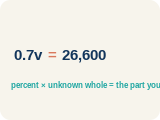
A math sentence with an equal sign. Here it says percent × whole = part, with the whole unknown.Una oración matemática con signo de igual. Aquí dice porcentaje × total = parte, con el total desconocido.
0.7v = 26,600 — the percent times the unknown whole equals the part
Loading the model…
1. Try this1. Prueba esto
If 18 is 30%, find 10%, then 100%.
Keep the part fixed and increase the percent. Predict whether the whole gets larger or smaller.
Check a recovered whole by multiplying it by the given percent.
3. Check yourself3. Compruébalo
Answer a question about your model, then one new problem without it.Responde una pregunta sobre tu modelo y luego un problema nuevo sin él.
Read the idea, follow the worked examples, and connect the picture to the numbers.Lee la idea, sigue los ejemplos resueltos y conecta el dibujo con los números.
1Step 1 of 9:Paso 1 de 9:Words to knowPalabras clave
Say what each word means, then tap the card to check.Di qué significa cada palabra y luego toca la tarjeta para comprobar.
2Step 2 of 9:Paso 2 de 9:Check the wordsComprueba las palabras
3Step 3 of 9:Paso 3 de 9:Working backwards to the wholeTrabajar al revés para hallar el entero
When you know a part and the percent it represents, the whole is missing. An equivalent ratio table keeps the percent and amount paired as you scale to 100%. A number line and an equation can show the same relationship.Cuando conoces una parte y el porcentaje que representa, falta hallar el total. Una tabla de razones equivalentes mantiene juntos el porcentaje y la cantidad mientras escalas hasta el 100%. Una recta numérica y una ecuación también pueden mostrar la misma relación.
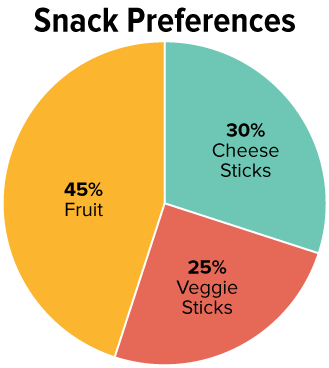
Three hundred middle school students voted for one of three snacks to add to the cafeteria menu, and the graph shows the PERCENT of students who chose each snack. Today the question runs the other way: if you knew only how many students picked one snack and what percent that was, could you work back to the total?Trescientos estudiantes de secundaria votaron por uno de tres bocadillos para agregar al menú de la cafetería, y la gráfica muestra el porcentaje de estudiantes que escogió cada bocadillo. Hoy la pregunta va al revés: si solo supieras cuántos estudiantes escogieron un bocadillo y qué porcentaje era eso, ¿podrías regresar hasta el total?
4Step 4 of 9:Paso 4 de 9:Watch meMírame
Watch me find the original price of the sweater
Akela paid $42 for a sweater on sale, and that was 60% of the original price. The $42 is the part; the original price is the whole, which is 100%.Akela pagó $42 por un suéter en oferta, y eso era el 60% del precio original. Los $42 son la parte; el precio original es el entero, que es el 100%.
I put the matching values in a ratio table: 60% pairs with $42. I want a friendly 10% row, so I divide both values by 6: 10% pairs with $7.Coloco los valores correspondientes en una tabla de razones: 60% va con $42. Quiero una fila sencilla de 10%, así que divido ambos valores entre 6: 10% va con $7.
To reach the whole, I multiply both values in the 10% row by 10: 100% pairs with $70. The original price is $70, which is larger than the sale price.Para llegar al total, multiplico ambos valores de la fila de 10% por 10: 100% va con $70. El precio original es $70, que es mayor que el precio de oferta.
I can check the table with an equation: 0.6 × v = 42, so v = 42 ÷ 0.6 = 70. The equation describes the same part-to-whole relationship.Puedo comprobar la tabla con una ecuación: 0.6 × v = 42, así que v = 42 ÷ 0.6 = 70. La ecuación describe la misma relación entre la parte y el total.
5Step 5 of 9:Paso 5 de 9:Let’s do one togetherHagamos uno juntos
Before each step, say what you think comes next. Then show it.Antes de cada paso, di qué crees que sigue. Luego muéstralo.
Let's do one together
Sheng's car is now worth $26,600, which is 70% of what his parents paid for it. Find the original price.El carro de Sheng ahora vale $26,600, que es el 70% de lo que pagaron sus papás por él. Halla el precio original.
Name the pieces first: $26,600 is the part, 70% is the percent, and the purchase price is the unknown whole.Nombra primero las piezas: $26,600 es la parte, 70% es el porcentaje, y el precio de compra es el entero desconocido.
Make a ratio table. Divide both values by 7 to find 10%: $26,600 ÷ 7 = $3,800.Haz una tabla de razones. Divide ambos valores entre 7 para hallar el 10%: $26,600 ÷ 7 = $3,800.
Multiply both values by 10 to reach 100%: $3,800 × 10 = $38,000. The purchase price was $38,000.Multiplica ambos valores por 10 para llegar al 100%: $3,800 × 10 = $38,000. El precio de compra fue $38,000.
6Step 6 of 9:Paso 6 de 9:Your turnTu turno
Your turn
A student spends 75 minutes in science class, which is 15% of the school day.Un estudiante pasa 75 minutos en la clase de ciencias, que es el 15% del día escolar.
Which number is the part, which is the percent, and what is the unknown whole?¿Cuál número es la parte, cuál es el porcentaje y cuál es el entero desconocido?
Start a ratio table with 15% paired with 75 minutes. Find a friendly percent row, then scale both columns to 100%.Empieza una tabla de razones con 15% junto a 75 minutos. Busca una fila de porcentaje sencilla y luego escala ambas columnas al 100%.
Find the length of the whole school day, and check that your answer is larger than 75 minutes.Halla la duración de todo el día escolar y comprueba que tu respuesta sea mayor que 75 minutos.
7Step 7 of 9:Paso 7 de 9:Check yourself: a first questionCompruébalo: una primera pregunta
8Step 8 of 9:Paso 8 de 9:Check yourself: a harder questionCompruébalo: una pregunta más difícil
9Step 9 of 9:Paso 9 de 9:Put it togetherJúntalo todo
Watch out for a common mistakeCuidado con un error común
A common mistake when finding the whole is multiplying by the percent instead of dividing. For "$42 is 60% of the original price," computing 0.6 × 42 = $25.20 makes the original price SMALLER than the sale price — impossible for a discount. Since percent × whole = part, the whole is found by dividing: 42 ÷ 0.6 = $70. Whenever the percent is less than 100%, the whole must come out larger than the part, so a smaller answer is the tell.
Sentence frameMarco de oración
If the percent is less than 100%, the given number is a ___, so the whole must be ___ than it.Si el porcentaje es menor que 100%, el número dado es una ___, así que el entero debe ser ___ que él.
Stage 3 of 5Etapa 3 de 5
PracticePractica
Choose Regular or Challenge. Hints come one step at a time; you get a new question after a worked example.Elige Regular o Reto. Las pistas llegan paso a paso; después de un ejemplo resuelto recibes una pregunta nueva.
Loading practice…
Stage 4 of 5Etapa 4 de 5
ApplyAplica
Use the idea in a real situation. Write your reasoning, then compare it with a sample.Usa la idea en una situación real. Escribe tu razonamiento y compáralo con un ejemplo.
Apply in context: Soccer seasonAplica en contexto: Temporada de fútbol
A soccer team has won 18 games so far. That is 60% of all the games it has played. How many games has the team played?Un equipo de fútbol ha ganado 18 partidos hasta ahora. Eso es el 60% de todos los partidos que ha jugado. ¿Cuántos partidos ha jugado el equipo?
Step 1 · Guide mePaso 1 · Guíame
60% is 6 groups of 10%. How many games is 10%?El 60% son 6 grupos de 10%. ¿Cuántos partidos es el 10%?
gamespartidos
Step 2 · Final answerPaso 2 · Respuesta final
gamespartidos
Real-world connectionConexión con el mundo real
Sheng's parents bought a new car last year. Its value today is $26,600, which is 70% of what they paid for it.Los papás de Sheng compraron un carro nuevo el año pasado. Su valor hoy es $26,600, que es el 70% de lo que pagaron por él.
Car value: dollars and percent of the purchase priceValor del carro: dólares y porcentaje del precio de compra
$26,600 sits at 70%. Each 10% is $3,800, so the whole — 100% — is $38,000.$26,600 está en el 70%. Cada 10% son $3,800, así que el entero — el 100% — es $38,000.
Question:Pregunta:What did the car cost when they bought it, and how does your method show it?¿Cuánto costó el carro cuando lo compraron, y cómo lo muestra tu método?
The $26,600 is the and the purchase price is the . Written as an equation, 0.7v = . Dividing both sides by gives v = . The whole is than the part, which makes sense because 70% is less than 100%.Los $26,600 son la y el precio de compra es el . Escrito como ecuación, 0.7v = . Dividir los dos lados entre da v = . El entero es que la parte, lo que tiene sentido porque el 70% es menos que el 100%.
Reasoning challengeReto de razonamiento
A toy store's puzzle stock was 25% 300-piece, 15% 500-piece, and the rest 1,000-piece. During a sale the store sold ALL of its 300-piece and 500-piece puzzles — 120 puzzles in total. How many of each type did the store have before the sale? Explain your reasoning.El inventario de rompecabezas de una juguetería era 25% de 300 piezas, 15% de 500 piezas y el resto de 1,000 piezas. Durante una oferta la tienda vendió TODOS sus rompecabezas de 300 y de 500 piezas — 120 rompecabezas en total. ¿Cuántos de cada tipo tenía la tienda antes de la oferta? Explica tu razonamiento.
Create & verify: Determine the Whole Given the Part and PercentCrea y verifica
Create a problem where you know the part and the percent, and must find the unknown whole (100%). Solve it with a double number line or division and check your answer.Crea un problema donde conozcas la parte y el porcentaje, y debas hallar el todo desconocido (100%). Resuélvelo con una razón o división y compruébalo.
Quick test bench (try numbers or expressions)Banco de prueba rápido (prueba números o expresiones)
Stage 5 of 5Etapa 5 de 5
ReflectReflexiona
Answer on your own. Your first try counts as independent evidence; you can still revise.Responde por tu cuenta. Tu primer intento cuenta como evidencia independiente; todavía puedes revisar.